With The Supremes-like "Dreamgirls" singing high notes at the box office, Diana Ross' break from her seven-year hiatus couldn't be more appropriately timed.
Even if it's not so dreamy.
The R&B legend's new solo outing, "I Love You," doesn't hold back on gushing sweet stuff. And that's only part of the problem. Even though the standards collection is muddied with cliches, Ross' issue isn't the saccharine material – a sea spanning decades of pop, rock and soul. It's even a blessing that the 14 tunes don't allow her voice, though it has aged fairly well, much room to work considering her once giddy vocals have lost their appeal (which could be blamed on some of the bland tracks). And while her notes maintain some power, a few songs sound amateurish.
But no wonder Ross sounds as generic as a holiday cookie-cutter. She's enlisted the production efforts of Steve Tyrell, the "mastermind" responsible for Rod Stewart's oodles of misguided pop standard collections. Yet another attempt to revive a past-their-prime songbird (see Gladys Knight and Barry Manilow and Patti LaBelle and Vanessa Williams), Ross has jumped on the bandwagon of a tired trend. Also, the seemingly new format – love songs – isn't much of a stretch for the washed-up diva. After all, how many of her tunes resist love?
The perkiness of her voice, which has ripened with age, is lost; making power ballads like "Take My Breath Away" well suited for her more mature, sometimes-rustic vocals. But those are as few as the risks she's taken.
Ross wholly depends on clunky standards that stay within her now-limited range like "More Today Than Yesterday" and the Bill Withers-written "Lovely Day." Even on the addition of the tepid, overlong new tune "I Love You (That's All That Really Matters)," which suffers from more sap than a maple tree and a distracting synthesized whistle noise, she plays it safe.
On "This Magic Moment" it's not Ross' restrained, enthusiastic delivery that sinks the song, it's the lazy arrangements. The Drifters' 1960's hit relies on synthesized horns when live instrumentation would've nixed the karaoke-sounding music.
The commercial-cursed "The Look of Love," penned by songwriting veterans Hal David and Burt Bacharach, immediately draws attention to Ross' phony slinky sexiness. Luckily, Ross' shining glory comes immediately after on the finely interpreted tune "What About Love" from "The Color Purple" where her voice sounds less plain Jane and more in tune to the album's message.
Still, it's not enough to forklift "I Love You" from being just another by-the-numbers standards album. And with love this humdrum, singlesville is looking pretty appealing.
Lost 'love': Diana Ross records generic comeback album
Read More

Meet Your Gaming Neighbor: Angela Washko Joins University of Michigan Arts Scene
Somewhere, a track coach is barking something — maybe motivational, definitely deafening — into the ear of a college freshman. If she listens [...]
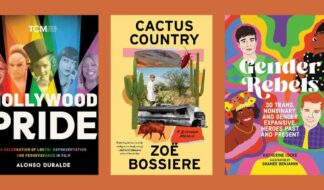
Summer Books That’ll Have You Feeling a Sense of Pride
Embrace the vibrant spectrum of LGBTQ+ experiences this Pride Month with our curated list of enlightening reads for readers of all ages. From stirring memoirs [...]
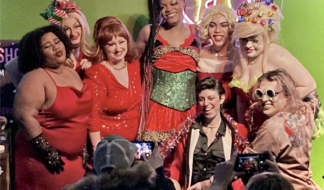
See Tituss Burgess with the DSO, Go Queer Camping, Get Fern Fest Tickets, Attend North Star Lounge LGBTQ+ Night
Another successful Michigan Pride season is in the books! Once again, communities across the state have pulled together to plan events ranging from sprawling [...]

‘I Am Pride’: Tituss Burgess on Performing with the Detroit Symphony Orchestra for Its Inaugural Pride Concert
When actor and singer Tituss Burgess takes the stage with the Detroit Symphony Orchestra, it won’t just be the DSO’s first official Pride concert [...]
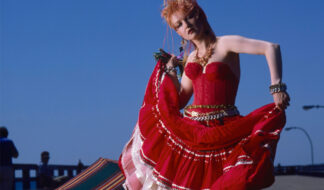
New Cyndi Lauper Doc Brings Overdue Spotlight to Queer Ally
Every era in our cultural memory has given rise to popular artists that helped to define them, but few can be said to have made as definitive an impact as Cyndi [...]
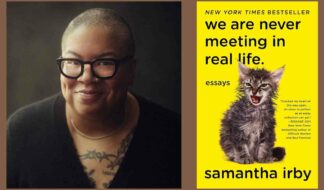
Immerse Yourself in the Samantha Irby Experience with Ann Arbor District Library’s Big Gay Read
You could think of Ann Arbor District Library’s upcoming Big Gay Read as a community book club on steroids. Like a traditional book club, participants [...]