Liz Eden, the Trans Woman Behind 'Dog Day Afternoon,' Finally Tells Her Own Story
Playwright Dmitri Barcomi built 'Doll Day Afternoon' from Eden's own recorded interviews
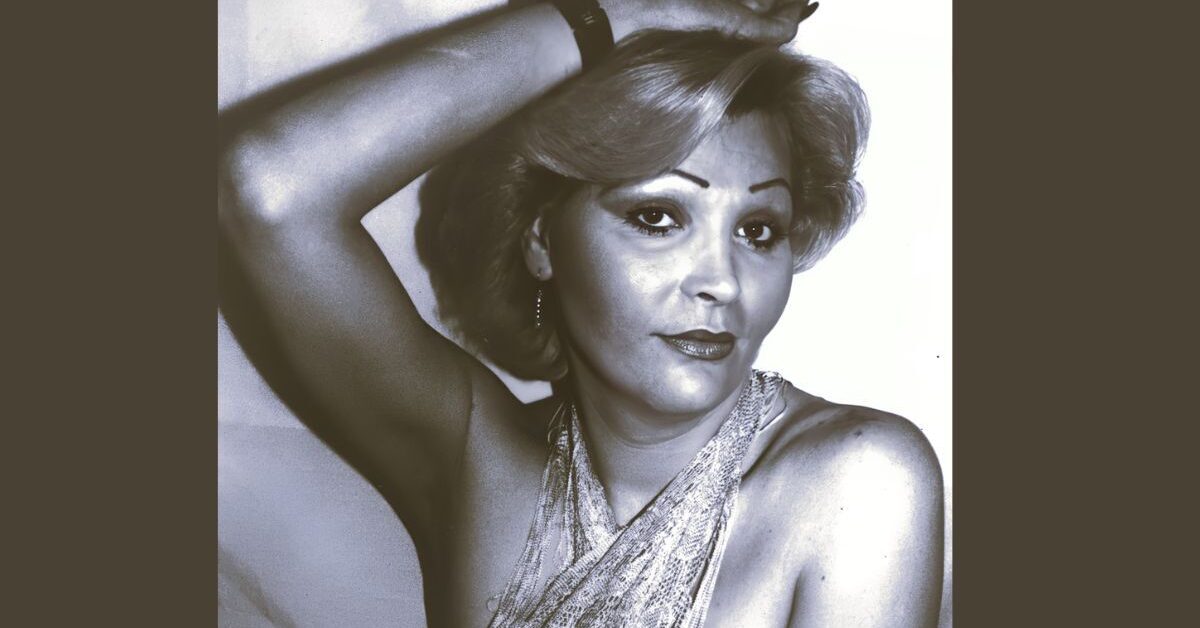

Elizabeth Debbie Eden died in 1987 and is buried in a grave with no headstone. But through some serendipitous confluence of thought, interest in her life story came to the minds of several unacquainted people at virtually the same time. I was one of them.
Most people never knew her name, but many know part of her story. It became the basis of the classic Al Pacino film "Dog Day Afternoon."
The movie portrayed a botched 1972 bank robbery in Brooklyn, committed by a man and his two accomplices to get money for his transgender partner's gender-affirming surgery. The bulk of the film takes place in and around the bank, and Pacino, as Sonny, is on screen almost the entire time. His trans partner appears in only a few scenes, played by cis actor Chris Sarandon. To add to the indignity, the character is called "Leon." The concept of deadnaming wasn't yet recognized.
I'd long been fascinated by "Leon" and the real person behind this fictional character. Who was this trans woman? There had to be more to her story than the bathrobe-clad psychiatric patient depicted in the film. Her fictional characterization gave no clues as to what drove Sonny to risk prison for her. And so I began a deep dive and fell into the rabbit hole of her life.
What I found upended the film's premise. Liz and John Wojtowicz, the real-life Sonny, held a symbolic wedding ceremony in 1971, which my research indicates John staged largely to make money. By the time of the robbery in August 1972, they weren't even dating. According to the Center's records on the Liz Eden Papers, Liz didn't know about the plan, and she was in the hospital recovering from a suicide attempt when it happened. John claimed he robbed the bank to pay for her surgery, but my research found he was actually trying to raise money to pay back mobsters he owed.
I spent months reading old newspaper and magazine articles about Liz Eden. I contacted several people online who had mentioned knowing her and asked them questions. And I came across the collection of her papers donated to the archive at the Lesbian, Gay, Bisexual & Transgender Community Center in New York City.
This personal trove of Liz's correspondence included an interview with her by her friend Richard N. Barraclough, whose papers eventually helped bring the collection to the archive.
Little did I know that I wasn't the only one accessing this collection at about the same time. Only recently did I learn from the Center's archive about Dmitri Barcomi, a New York City transgender playwright who had based a new play on Barraclough's interview.
Barcomi uses the phrase "American born, European formed" to describe his peripatetic upbringing, which included moving to Europe and back. Early on, he knew theater was his expression of choice.
"I knew I was queer from a pretty early age, probably my tweens, and I've always used theater as a means to explore gender performativity," he said.
His past work includes "A Jury of Our Queers," a metatheatrical drag show putting Mae West and Helen Menken on trial to determine their roles in queer legacy, and "The Heresy Machine," which adapted Alan Turing's computer coding into choreography for a surreal queer love story between Turing and his computer. He also created "Others," a live silent movie based on "Anders als die Andern," the early LGBTQ+ rights film co-written by sexologist Magnus Hirschfeld.
"The work that I create is inspired by a deep love of honoring queer icons through my use of the archive and unusual source materials," he said. It was personally satisfying to learn that his methodology mirrors the one I use to write the trans biographies on my Substack.
So how did Liz Eden come to his attention?
"Back in 2019 my dear friend Sean Pollock, another queer theater artist, invited me to join them at the LGBT Center's Archive here in New York to look at the archive's collection of Liz Eden's papers," Barcomi said. "I was absolutely captivated by Liz and how much of her personality came through the photos and documents that were in the archive."
"I then backtracked and watched 'Dog Day Afternoon.' I shared your reaction as well: this was not Liz's story, she is absurdly misrepresented, and her own story deserves to be shared. My inspiration to create this play was borne out of my desire to give Liz her flowers and create a work of art that celebrates trans history and acts as a vehicle for trans talent to shine. Liz is truly an icon and should be celebrated as such!"
"Out of the many treasures contained within the Liz Eden Papers at the LGBT Center's Archive, the artifact that inspired me the most is a 70-page transcript of a series of interviews with Liz, conducted by her best friend Richard [Barraclough]," Barcomi said.
"The interview exists in the form of a transcript…a trans! script! Hello!! Richard and Liz had recorded the interviews on a tape recorder and then Richard typed the whole thing up. In this transcript, Liz clears the air about 'Dog Day Afternoon,' giving her own perspective to the events portrayed in the film and how she was misrepresented, as well as sharing many absolutely incredible anecdotes about her life as a trans woman in pre-Stonewall era New York City. It's moving, it's raunchy, it's an extremely unique HERstoric perspective."
I smiled as I read Barcomi's words. We had the same reaction to this interview. For me, it was one piece of the complicated life story I had pieced together. For Barcomi, it became the basis for his play, "Doll Day Afternoon."
"I took the 70-page manuscript and whittled it down to about 25 pages, choosing passages that felt thematically linked to one another. There are numerous motifs I identified throughout the piece, as well as stories and turns of phrase that tickled me," he said. "Liz's interview does not follow a traditional narrative plot structure, so in keeping with that, the play jumps around in time and space."
"I was inspired by the form of the interview itself, of it being a recording that Liz was making, and that is the structure of the show. We begin with the interview commencing and then layers of reality (or unreality) begin to appear. I also wanted to make visible as an artistic device the autonomy that the tape recorder gives Liz, something that the pop culture denied her. In my play, Liz has the ability to stop the tape, rewind, re-record…to set the record straight (or gay, as it were), and to tell her story the way she sees fit. The tape recorder takes on a kind of magical, metatheatrical property that allows Liz, and the audience, to move through many layers of time, truth and reality."
"Doll Day Afternoon" runs Oct. 15–25 at La MaMa Experimental Theatre Club in New York City. Asked whether the play might ever go on the road, Barcomi said that remains to be determined.
Either way, he and I have discovered a long-distance kinship that drew from the same well and resulted in his play and my eight-part biographical series about a long-forgotten and tragically overlooked trans icon. Hopefully now Liz Eden can rest in peace.
What to know at a glance
Who was Liz Eden?
Elizabeth "Debbie" Eden was the transgender woman whose partner's 1972 Brooklyn bank robbery inspired "Dog Day Afternoon." In the film she is a minor character called "Leon," played by cis actor Chris Sarandon. She died in 1987 and is buried in a grave with no headstone.
Is 'Dog Day Afternoon' actually a true story?
Only partly. Research into Eden's papers found she and John Wojtowicz were not dating by August 1972, she did not know about the robbery and was hospitalized after a suicide attempt when it happened. Wojtowicz appears to have needed money to repay mobsters.
What is 'Doll Day Afternoon' about and how was it made?
Playwright Dmitri Barcomi condensed a 70-page transcript of interviews Richard N. Barraclough recorded with Eden into roughly 25 pages. The play jumps through time, using the tape recorder as a metatheatrical device that lets Liz stop, rewind and re-record her own story.
Where can I see the play and will it tour?
"Doll Day Afternoon" runs Oct. 15–25 at La MaMa Experimental Theatre Club in New York City. Barcomi said whether the production travels beyond that run remains to be determined.
Get Pride Source in your inbox
Michigan LGBTQ+ news, arts and community, free once a week.
It’s free, and you can unsubscribe any time (privacy policy).
Read More
A Trans Woman Invented the Tech Behind Your Smartphone in 1965. (And Then IBM Fired Her, Obviously.)
Pride season may be behind us, but the transphobia and legal attacks to which it was a defiant answer haven't gone anywhere. The parades end, the flags [...]Read more about A Trans Woman Invented the Tech Behind Your Smartphone in 1965. (And Then IBM Fired Her, Obviously.)

WOOD-TV Bosses Who Told Reporters To Get 'Both Sides' Of Pride in Grand Rapids Just Won $4 Million
What could it possibly mean to cover “both sides” of Pride? The two WOOD-TV news managers who told reporters to do just that never said, and a federal jury in [...]Read more about WOOD-TV Bosses Who Told Reporters To Get 'Both Sides' Of Pride in Grand Rapids Just Won $4 Million

Elon Musk Has All of the Money, None of the Juice
You’ve got to hand it to Elon Musk. He is both the richest man in the world and a total fucking loser.He’s living proof that money can’t buy you happiness, [...]Read more about Elon Musk Has All of the Money, None of the Juice

Meet the Out LGBTQ+ Candidates on Michigan's November Ballot
Ten out LGBTQ+ candidates are on Michigan's Nov. 3 ballot, and two could make history. State Sen. Jeremy Moss would be the first out LGBTQ+ member of [...]Read more about Meet the Out LGBTQ+ Candidates on Michigan's November Ballot

Coordinators of huge Nov. 15 protests plan new actions
by Rex Wockner Several new activities are being planned by JoinTheImpact, the grassroots organizers who conceptualized and coordinated the huge Nov. 15 [...]Read more about Coordinators of huge Nov. 15 protests plan new actions
Calif. legislators to undertake repeal of Prop. 8
SACRAMENTO – When California's state legislators return in 2009 Senator Mark Leno (D-San Francisco) and Assemblymember Tom Ammiano (D-San Francisco) plan to [...]Read more about Calif. legislators to undertake repeal of Prop. 8
More in Trans Lucent

America's Prettiest Girl: The Remarkable Story of Gender-Bending Trailblazer Lionel 'Iron Mike' Ames
In an era decades before "RuPaul's Drag Race" or political battles over drag performers, a University of Michigan student named Lionel "Iron [...]Read more about America's Prettiest Girl: The Remarkable Story of Gender-Bending Trailblazer Lionel 'Iron Mike' Ames

What Is Going on With Sarah McBride?
U.S. Rep. Sarah E. McBride (D - Delaware), is the first openly transgender person elected to the U.S. Congress. A historic and groundbreaking achievement, [...]Read more about What Is Going on With Sarah McBride?

Respect Yourself: Why Using Terms Like 'Tranny' Is Not Empowering
Words can make or break a person. How you communicate with another informs their perception of you, and how you allow others to communicate with you also forms [...]Read more about Respect Yourself: Why Using Terms Like 'Tranny' Is Not Empowering

Today Is the Day: Rallies at State Capitols, Including One in Lansing, as Transgender Activism Comes Alive
Every revolution has a starting point, a historical touchstone that when looked back upon, people will say it was when anger and fear and ideologies coalesced [...]Read more about Today Is the Day: Rallies at State Capitols, Including One in Lansing, as Transgender Activism Comes Alive