A Trans Woman Invented the Tech Behind Your Smartphone in 1965. (And Then IBM Fired Her, Obviously.)
Lynn Conway invented a breakthrough that shaped modern computing, then spent 30 years watching IBM get the credit while she stayed hidden

Pride season may be behind us, but the transphobia and legal attacks to which it was a defiant answer haven't gone anywhere. The parades end, the flags come down, but the fight underneath them doesn't take a season off.
Long before any parade took place, before trangender people dared not gather, even before the concept of being transgender was a "thing," individual battles were being fought by trans people for the right to exist. Trans Pride is an announcement of self-affirmation and dignity. But it wasn't easily attained, and it thrives due to the battle-tested, wounded and unbowed victims of prejudice before us who refused to give in or give up.
That fight for the right to exist didn't stay in the streets. It also played out in boardrooms, laboratories and workplaces where being discovered as transgender could end a career overnight, no matter how essential the work being done. Few stories make that clearer than Lynn Conway's. In 1968, IBM fired Conway, one of its best young engineers for being transgender — and then spent the next half-century getting credit for the very breakthrough she helped create.
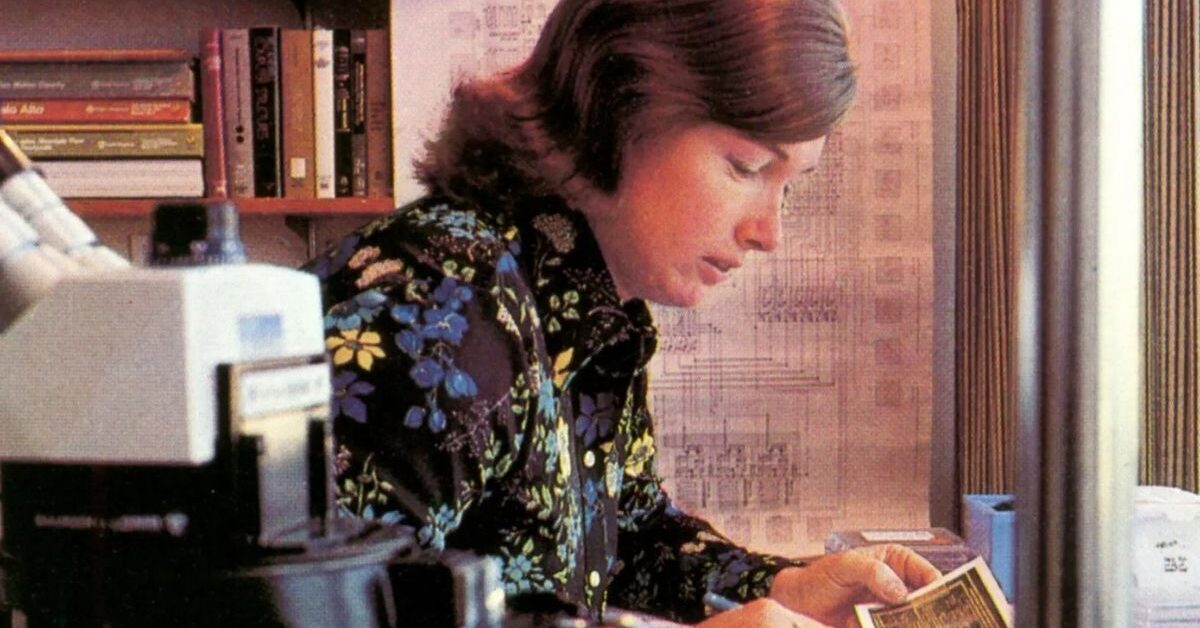
Conway was among IBM’s best young engineers in the mid-1960s, working under her deadname on a secret project known as Project-Y. The team was trying to build a computer 100 times faster than the IBM 7030, known as "Stretch," then the reigning title holder for world's fastest computer. Their breakthrough was a technique called superscalar processing, letting a single processor execute more than one instruction per cycle — and Conway's specific contribution, a method called dynamic instruction scheduling, would go on to become standard in the chips that eventually powered PCs and cell phones.
None of her colleagues on that project knew she was anything other than the married father of two she appeared to be. Conway had quietly begun taking estrogen as early as 1955, but she was still presenting as a man when the project got underway. In 1968, she told her bosses about her gender dysphoria and her plans to pursue gender-affirming surgery. IBM fired her within months, before the procedure, which she underwent in Mexico.
There was no legal recourse for a firing like that in 1968. Conway and her family neared financial ruin, the strain of her coming out to her wife ended the marriage, and she was cut off from her two young daughters for the next 14 years. She interviewed successfully at other computer firms in the years that followed, only to watch offers evaporate once employers learned her gender history.

She eventually landed at Xerox, where she became a key figure at the company's Palo Alto Research Center, developing Very Large Scale Integration technology that directly shaped the personal computer and, later, the cellphone. By the mid-1980s, Conway was recognized as one of the world's leading computer scientists. In 1985, the University of Michigan hired her as a professor of electrical engineering and computer science, and she became associate dean of the College of Engineering.
For the next 13 years, Conway taught quietly in Ann Arbor. Few people knew she was transgender, let alone that she'd once worked at IBM under a different name. That changed in 1999, when she read a paper by computer science professor Mark Smotherman about the long-defunct Project-Y and realized she was one of the only people still holding onto research material from it. She decided to share her archive with him, which meant confronting a problem: almost nobody knew she'd been part of the team at all.
Conway quietly added a "Retrospective" page to her personal website, outing herself with no announcement, just a plain accounting of her early career. The response from colleagues who'd never known her as anything but a woman was largely respectful. Her computing legacy became more widely known from there, and so did her place as a transgender pioneer — though credit came slowly. IBM didn't formally apologize until 2020, at a company event where an executive called Conway "probably our very first transgender employee to come out" and presented her with a lifetime achievement award, 52 years after firing her.
In 2023, Conway was inducted into the National Inventors Hall of Fame. She died June 9, 2024, at her home in Jackson, Michigan, at 86.
She left behind a hope she didn't live to see fulfilled, written in the third person in the final lines of her autobiographical essay, "Lynn's Story":
"The day will come when gender transition is no longer seen as a sad, somewhat shameful, and tragic event, but instead as a wonderful life-giving miracle for those so unfortunate as to have been mis-gendered at birth. Lynn hopes to live to see that day."
Get Pride Source in your inbox
Michigan LGBTQ+ news, arts and community, free once a week.
It’s free, and you can unsubscribe any time (privacy policy).
Read More

Doing It For the Clicks: Boebertjuice Boebertjuice Boebertjuice
It's been a long time since I thought about Lauren Boebert. I think the last time she was on my radar was when she was giving Beetlejuice handies to some [...]Read more about Doing It For the Clicks: Boebertjuice Boebertjuice Boebertjuice

Democrat Rep. Marcy Kaptur Shows She's Just As Anti-Trans As Her Opponent
Stop telling trans people they have to vote for anti-trans Democrats. Stop telling them they'll be responsible for the fall of democracy unless they [...]Read more about Democrat Rep. Marcy Kaptur Shows She's Just As Anti-Trans As Her Opponent

Democrats Won’t Win by Giving in to Transphobia
I was at a concert recently and a person next to me was wearing a cross-body bag that read, “Speak Up for Your LGBTQ+ Friends.” This person appeared to be your [...]Read more about Democrats Won’t Win by Giving in to Transphobia

Trump Is Targeting the Smithsonian. My LGBTQ+ History Is Inside It.
There’s been something troubling me for the last couple of years about what the Trump administration has been doing. It affects me personally, but I’ve mostly [...]Read more about Trump Is Targeting the Smithsonian. My LGBTQ+ History Is Inside It.

Let's End Anti-LGBTQ Discrimination in Michigan
Summer just ended in Michigan; it's a bittersweet time. The season is an opportunity to celebrate how far LGBTQ people have come and a reminder of how far we [...]Read more about Let's End Anti-LGBTQ Discrimination in Michigan
Creep of the Week: Super Happy Fun America
If you said the words "Super Happy Fun America" to me and then asked me what that was, I would have guessed it was the name of a low-budget, USA-themed [...]Read more about Creep of the Week: Super Happy Fun America
More in Trans Lucent

Skrmetti Supreme Court Case Could Reshape Trans Rights Nationwide — Including Michigan
Update: Since this article was published, the U.S. Supreme Court upheld Tennessee's ban on gender-affirming medical care for minors in U.S. v. Skrmetti, [...]Read more about Skrmetti Supreme Court Case Could Reshape Trans Rights Nationwide — Including Michigan

America's Prettiest Girl: The Remarkable Story of Gender-Bending Trailblazer Lionel 'Iron Mike' Ames
In an era decades before "RuPaul's Drag Race" or political battles over drag performers, a University of Michigan student named Lionel "Iron [...]Read more about America's Prettiest Girl: The Remarkable Story of Gender-Bending Trailblazer Lionel 'Iron Mike' Ames

What Is Going on With Sarah McBride?
U.S. Rep. Sarah E. McBride (D - Delaware), is the first openly transgender person elected to the U.S. Congress. A historic and groundbreaking achievement, [...]Read more about What Is Going on With Sarah McBride?

Respect Yourself: Why Using Terms Like 'Tranny' Is Not Empowering
Words can make or break a person. How you communicate with another informs their perception of you, and how you allow others to communicate with you also forms [...]Read more about Respect Yourself: Why Using Terms Like 'Tranny' Is Not Empowering