Why LGBTQ+ Voters Are Watching Michigan’s Proposals 1 and 2
A constitutional convention and a ban on utility donations top the statewide questions Nov. 3
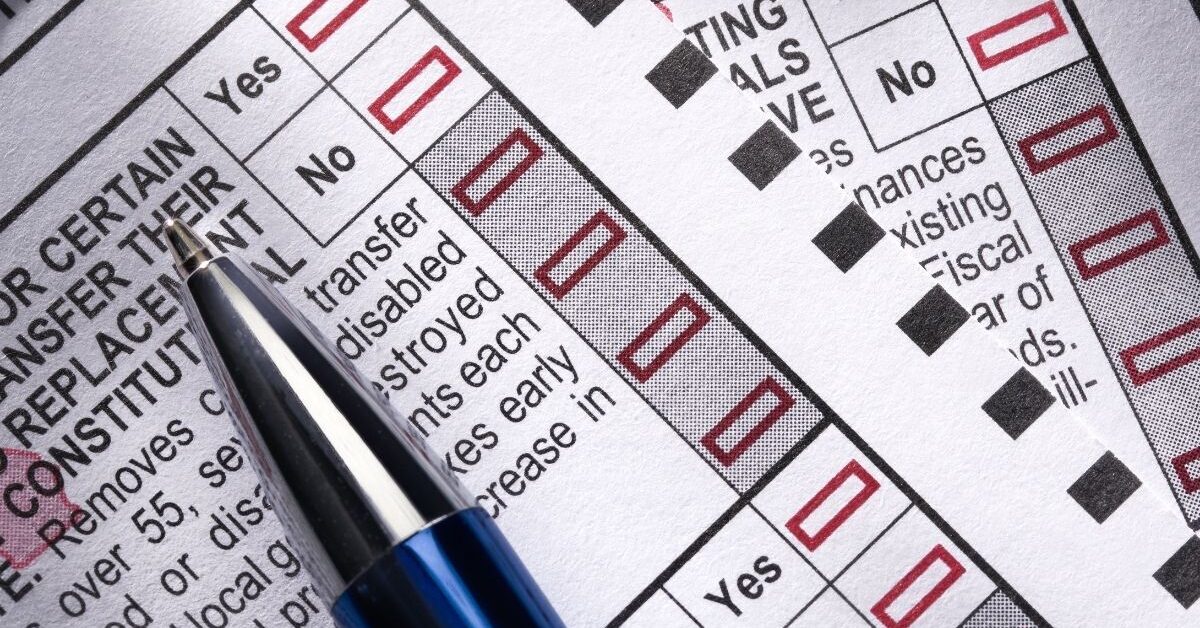

Every Michigan voter will find the same two statewide questions at the bottom of the ballot Nov. 3. Proposal 1 asks whether to call a convention to rewrite the state constitution, the document that now guarantees reproductive freedom along with the early voting and same-day registration many Michiganders will use this fall. Proposal 2 would bar regulated electric and gas utilities and large government contractors from donating to the officials who oversee them or award their contracts.
Neither question involves a candidate, and both pass or fail by a simple majority of people voting on them.
Proposal 1 asks whether to rewrite the state constitution
Proposal 1 isn't a citizen petition or a bill from Lansing. Article XII, Section 3 of the 1963 Michigan Constitution puts the question on the ballot automatically every 16 years. The ballot asks, "Shall a convention of elected delegates be convened in 2027 to draft a general revision of the State Constitution for presentation to the State's voters for their approval or rejection?"
A yes vote starts the process. According to the nonpartisan Senate Fiscal Agency, voters would elect 148 delegates, one from each state House and Senate district, in partisan elections likely held in May and August 2027. Delegates would convene in Lansing Oct. 5, 2027, set their own rules and draft a new constitution or amendments. Nothing they write takes effect unless a majority of all delegates sends it to the ballot and a majority of voters then approves it at an election held at least 90 days after the convention adjourns.
A no vote leaves the current constitution in place, and the question returns in 2042. Voters can still amend the constitution one proposal at a time through petitions or legislative referrals, as they did in 2018 and 2022.
Michigan voters last approved a convention in 1961, which produced the current constitution. They rejected the question in 1978 and 1994, and in 2010 they voted it down roughly 2 to 1. This year may be closer. A WDIV/Detroit News poll taken Aug. 31–Sept. 3 found 47% of respondents in favor, 31% opposed and 22% undecided.
The Senate Fiscal Agency estimates a convention would cost at least $10 million, based on the 1961 convention adjusted for inflation, and possibly several times that depending on how long it runs. Holding delegate elections or a ratification vote outside regularly scheduled elections would add about $20 million for each statewide election.
What's at stake for LGBTQ+ Michiganders
A convention would open the entire constitution, including amendments voters added in recent years. That includes the reproductive freedom amendment voters approved in 2022 and the voting rights section that guarantees nine days of early voting, no-reason absentee ballots and registration through Election Day with proof of residency.
The constitution also still contains the 2004 amendment defining marriage as between one man and one woman. It has been unenforceable since the U.S. Supreme Court's 2015 Obergefell v. Hodges decision, but the text remains. Michigan's explicit civil rights protections based on sexual orientation and gender identity live in the Elliott-Larsen Civil Rights Act, a state law expanded in 2023, and not in the constitution itself.
Equality Michigan Action Network (EMAN), the political arm of Equality Michigan, urges a no vote, warning that a convention "could have serious consequences for equality for LGBTQ+ Michiganders." The group also argues delegate races would run without campaign finance limits or disclosure rules.
Abortion has already surfaced in the campaign over Proposal 1. State Rep. Jay DeBoyer, the Republican nominee for lieutenant governor, suggested at a Battle Creek event in September that Republicans could restore abortion restrictions through a convention, Michigan Advance reported. He later called the issue "settled." Right to Life of Michigan, which opposed the 2022 amendment, also opposes Proposal 1. "RLM is opposed to opening the state constitution to a convention at this time," President Amber Roseboom said in a statement.
Who supports it
The most prominent backers are Republican legislative leaders. At the 2025 Mackinac Policy Conference, House Speaker Matt Hall said he thinks the state needs a "Con-Con," according to Michigan Advance. "They stuff so many things in this Constitution, all kinds of things, every time," Hall said, pointing to ballot proposals on marijuana legalization and the independent redistricting commission. Senate Minority Leader Aric Nesbitt said "the constitution could be a lot simpler than what it is right now."
The Senate Fiscal Agency summarizes supporters' broader case as a chance to streamline a long, complicated document and reform areas like education and the budget process.
Who opposes it
Opposition is unusually broad. The Protect MI Constitution from Special Interests coalition lists more than 60 members, including the ACLU of Michigan, the Michigan Chamber of Commerce, the UAW, Planned Parenthood Advocates of Michigan, the Michigan Catholic Conference, Citizens for Traditional Values and the Michigan Democratic Party LGBT&A Caucus.
"Voters have said no to a Con-Con by huge margins every time it has come to a vote, and for good reason," Lisa Wozniak, president and CEO of the Michigan League of Conservation Voters, told Michigan Advance. Michigan AFL-CIO President Ron Bieber said, "Michigan working families simply can't afford a Con-Con."
Proposal 2 would limit donations from utilities and big contractors
Proposal 2 is a citizen-initiated law from the Michiganders for Money Out of Politics campaign. It amends the Michigan Campaign Finance Act and doesn't change the constitution. The ballot language approved by the Board of State Canvassers says the proposal would
- "Prohibit regulated electric and gas utilities, contractors with over $250,000 annually in government contracts, and people and organizations with substantial connections to these utilities/contractors from making direct or indirect campaign contributions to those who run for or hold offices that impact them."
- "Expand laws regulating spending on political communications, including those requiring disclosing donor information, to apply to communications clearly identifying candidates or ballot questions, even if they do not expressly advocate voting for/against them."
- "Expressly apply the law requiring disclosure of who paid for political communications to internet political communications."
A yes vote puts those rules into state law. According to the Senate Fiscal Agency, utilities regulated by the Michigan Public Service Commission couldn't give to candidates for governor, attorney general or the Legislature, to state or local party committees or to Public Service Commission members. Contractors couldn't give to candidates in the jurisdiction that awarded the contract, though that ban wouldn't be enforced until 18 months after the law takes effect. Utilities could face fines of up to 10 times an illegal contribution, and contractors could lose their contracts. Anyone spending $5,000 or more a year on ads that name a candidate would have to report it.
A no vote keeps current campaign finance law as it is.
Because it's a citizen-initiated law, the Legislature could amend it only with a three-fourths vote in both chambers.
Who supports it
"Michiganders are ready to finally rein in pay-to-play politics," Christy McGillivray, co-chair of the campaign's steering committee, said in an August statement reported by Michigan Advance after the canvassers approved the ballot language. She told Michigan Public the campaign planned "hundreds of events" to reach voters.
EMAN urges a yes vote, saying "affordability and a democracy that works for people are equality issues." The group argues that monopoly utilities and large contractors shouldn't fund the politicians who regulate them or hand out their contracts.
Who opposes it
Protect MI Free Speech, which challenged the petition before the Board of State Canvassers, says voters aren't getting the full picture. "Nothing is as simple as it appears on the surface," spokesperson John Sellek told Michigan Public. The Senate Fiscal Agency summarizes opponents' case as an expansion of government regulation of political speech that singles out one industry and could invite costly lawsuits.
The nonpartisan Citizens Research Council of Michigan also expects legal challenges if the measure passes, since U.S. Supreme Court rulings let states limit contributions mainly to prevent outright quid pro quo corruption. "So there's only so much that any state can do to really tackle this issue under the current framework," attorney Karley Abramson, who wrote the council's analysis, told Michigan Public. The measure includes a severability clause, so the online ad disclosure rules and other provisions would stand even if a court struck down part of it.
FAQ
When will I vote on Proposals 1 and 2? Both questions appear at the end of every Michigan ballot in the Nov. 3 general election, after the partisan and nonpartisan races. You'll see them whether you vote early in person, by absentee ballot or at the polls on Election Day.
What does a yes vote on Proposal 1 do? A yes vote calls a constitutional convention. Voters would elect 148 delegates in 2027, and any new constitution they draft would go back to voters for approval before taking effect.
What does a no vote on Proposal 1 do? A no vote keeps the current 1963 constitution. Voters can still amend it one proposal at a time, and the convention question returns automatically in 2042.
Why is Proposal 1 on the ballot? The Michigan Constitution requires the question every 16 years. No group petitioned for it this year.
Could a convention change LGBTQ+ rights in Michigan? Delegates could propose changes to any part of the constitution, including the 2022 reproductive freedom amendment and voting rights provisions. Michigan's sexual orientation and gender identity protections are in state law, the Elliott-Larsen Civil Rights Act, and not in the constitution. Voters would have the final say on any new constitution.
What does a yes vote on Proposal 2 do? A yes vote bans campaign contributions from regulated electric and gas utilities and from contractors with more than $250,000 a year in government contracts to the officials who oversee them. It also expands disclosure rules for political ads, including online ads.
What does a no vote on Proposal 2 do? A no vote leaves Michigan's current campaign finance law unchanged.
Does Proposal 2 change the state constitution? No. It's an initiated law that amends the Michigan Campaign Finance Act. The Legislature could change it later only with a three-fourths vote in each chamber.
Where can I see my full ballot? Enter your information at michigan.gov/vote to see a sample ballot with every race and proposal in your community.
What to know at a glance
When do I vote on Michigan's Proposals 1 and 2?
Both questions appear at the end of every Michigan ballot in the Nov. 3 general election, after the partisan and nonpartisan races. You'll see them whether you vote early in person, by absentee ballot or at the polls on Election Day.
What happens if Proposal 1 passes?
A yes vote calls a constitutional convention. Voters would elect 148 delegates, one per state House and Senate district, in 2027, and delegates would convene in Lansing Oct. 5, 2027. Any new constitution they draft would go back to voters for approval.
Could a constitutional convention affect LGBTQ+ rights in Michigan?
Delegates could propose changes to any part of the constitution, including the 2022 reproductive freedom amendment and voting rights provisions. Michigan's sexual orientation and gender identity protections sit in state law, the Elliott-Larsen Civil Rights Act, not the constitution. Voters would have the final say on any new constitution.
Does Proposal 2 change the state constitution?
No. Proposal 2 is a citizen-initiated law amending the Michigan Campaign Finance Act. It would bar regulated electric and gas utilities and contractors with more than $250,000 a year in government contracts from donating to officials who oversee them. The Legislature could amend it only with a three-fourths vote in both chambers.
Get Pride Source in your inbox
Michigan LGBTQ+ news, arts and community, free once a week.
It’s free, and you can unsubscribe any time (privacy policy).
Read More
Michigan Voting Deadlines Ahead of Nov. 3
Monday, Oct. 19 is the last day to register to vote online or by mail in Michigan for the Nov. 3 general election. Miss it and you can still register and vote, [...]Read more about Michigan Voting Deadlines Ahead of Nov. 3
Your LGBTQ+ Guide To Michigan's 2026 Supreme Court Race
Michigan voters will fill two of the seven seats on the state Supreme Court Nov. 3, and the result will help decide how the state's highest court handles [...]Read more about Your LGBTQ+ Guide To Michigan's 2026 Supreme Court Race

Queer News In Brief: Curtis Renee Remembered, Ferndale Pride Moves to August, Whitmer Headlines HRC Dinner, Stonewall Museum Loses Funding
Ann Arbor's school board bought itself 90 days of breathing room in its standoff with the U.S. Department of Justice this week, while Detroit gets ready to [...]Read more about Queer News In Brief: Curtis Renee Remembered, Ferndale Pride Moves to August, Whitmer Headlines HRC Dinner, Stonewall Museum Loses Funding

In Detroit PBS' 'Faith in Detroit' Series, Julisa Abad said She Feels God's Presence 'Every Day'
When the Rev. William Danaher asked Julisa Abad whether she feels God's presence as she helps families find justice through the legal system, the Detroit [...]Read more about In Detroit PBS' 'Faith in Detroit' Series, Julisa Abad said She Feels God's Presence 'Every Day'

Stephanie Loveless sings for her sex change - and her survival
"Let her cry, for she's a lady; Let her dream, for she's a child; Let the rain fall down upon her; She's a free and gentle flower growing wild." -"Wildflower," [...]Read more about Stephanie Loveless sings for her sex change - and her survival
Shock game to raise funds for Michigan Equality
AUBURN HILLS – The Sacramento Monarchs and the Detroit Shock will compete in a Women's Basketball Fundraiser to promote equality and eliminate discrimination [...]Read more about Shock game to raise funds for Michigan Equality
More in Voter Guide
Celebrities, LGBT Figures 'Turn Out For What'
By BTL Staff Check out the latest video for "Rock the Vote," featuring Natasha Lyonne ("Orange is the New Black"), Fred Armisen ("Portlandia"), Lena Dunham [...]Read more about Celebrities, LGBT Figures 'Turn Out For What'
Pride Source Voter's Guide to Endorsements
Return to the Pride Source Voter's Guide GLBT Between the Lines Lansing Association for Human Rights http://www.lahronline.org Kalamazoo Alliance for [...]Read more about Pride Source Voter's Guide to Endorsements
VIDEO: Unions and Gays Unite in Support of Proposal 2
"As a woman in skilled trades, I've had equal opportunity. I've had a living wage. I've got healthcare for my family and I don't have to worry about being [...]Read more about VIDEO: Unions and Gays Unite in Support of Proposal 2
Get your Michigan Voter's Guide
Enter your zip code to get your personalized copy of the Pride Source Votes voter guide. Or select your US House District: District 1 District 2 District [...]Read more about Get your Michigan Voter's Guide