Your LGBTQ+ Guide To Michigan's 2026 Supreme Court Race
Two seats are on the Nov. 3 ballot, and the court has shaped nearly every major LGBTQ+ legal win in Michigan this decade
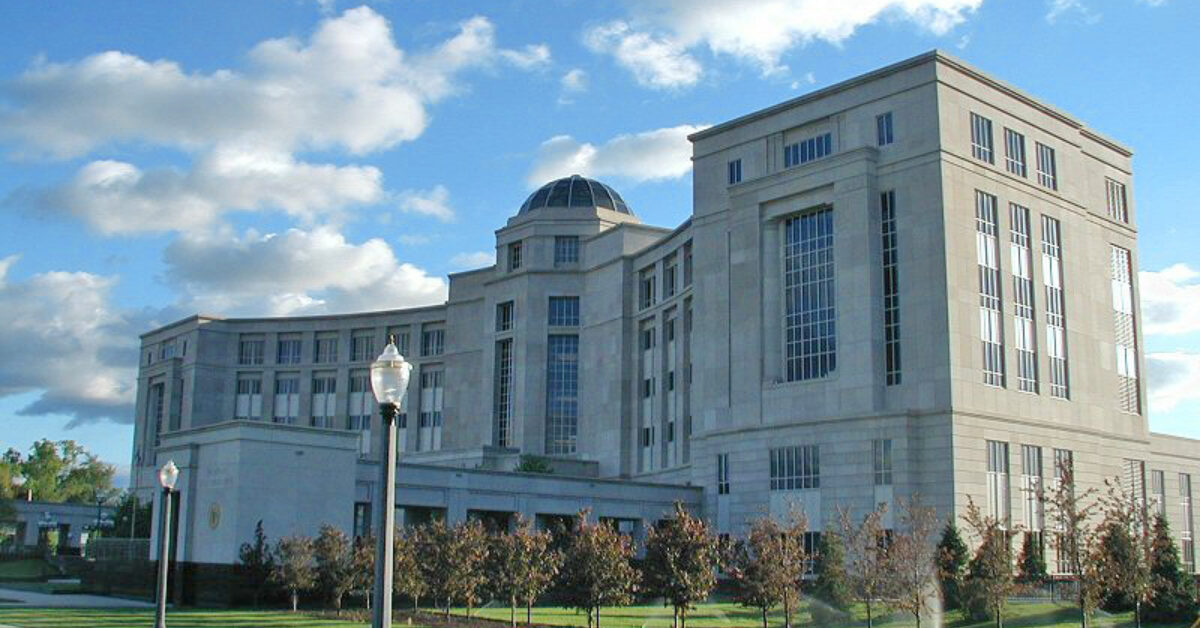

Michigan voters will fill two of the seven seats on the state Supreme Court Nov. 3, and the result will help decide how the state's highest court handles cases affecting LGBTQ+ Michiganders for the next eight years.
Both seats on the ballot belong to Democratic-nominated incumbents, Chief Justice Megan Cavanagh and Justice Noah Hood. Democratic nominees and appointees hold a 6-1 majority on the court, so even if Republican nominees won both seats, the majority would narrow to 4-3 rather than flip.
That majority has been behind the state's most significant LGBTQ+ court decisions in recent years. In 2022, the court ruled 5-2 in Rouch World v. Michigan Department of Civil Rights that the Elliott-Larsen Civil Rights Act's ban on sex discrimination covers discrimination based on sexual orientation. The Legislature added sexual orientation and gender identity to the law the following year. In 2023, the court extended custody rights to some unmarried same-sex parents in Pueblo v. Haas and adopted a rule requiring judges to address people by their pronouns or other respectful means. Both decisions came 5-2 over dissents from Justices Brian Zahra and David Viviano, the court's two Republican-nominated members at the time.
Party labels don't appear on the ballot, but Supreme Court candidates are nominated at party conventions. Six candidates are running, and voters can choose up to two. Equality Michigan Action Network (EMAN), the state's LGBTQ+ political advocacy organization, has endorsed Cavanagh and Hood.
Michigan Public's "Morning Edition" interviewed all six candidates this fall. None of those conversations touched on LGBTQ+ issues directly, so the profiles below draw on each candidate's record.
Megan Cavanagh
Democratic nominee, incumbent
Cavanagh was first elected to the court in 2018, and her colleagues chose her as chief justice in 2025. Before joining the bench, she was an appellate attorney in private practice in Detroit.
She has the longest LGBTQ+ record of any candidate in the race. Cavanagh joined the majority in Rouch World and wrote the majority opinion in Pueblo v. Haas, which held that a former same-sex partner who would have married but for Michigan's unconstitutional marriage ban can seek custody as an equitable parent. "The children of same-sex partners bear no lesser rights to the enjoyment and support of two parents than children born to married opposite-sex parents," the court wrote. She also voted for the 2023 pronoun rule.
In her interview with Michigan Public, Cavanagh said she prefers the court's elected system but wishes party nominations weren't part of it, and that few cases before the justices break along partisan lines.
Endorsed by EMAN.
Noah Hood
Democratic nominee, incumbent
Gov. Gretchen Whitmer appointed Hood in May 2025 to replace former Chief Justice Elizabeth Clement, who left to lead the National Center for State Courts. He previously served on the Michigan Court of Appeals and Wayne County's 3rd Circuit Court and worked as a federal prosecutor. His appointed term ends this year, and he's running for a full eight-year term.
Hood joined the court after its major LGBTQ+ rulings, so his record there is shorter. He was on the bench in October 2025 when the court adopted a judicial conduct rule barring judges from manifesting bias or prejudice or engaging in harassment in their official duties. During public comment, the proposal drew strong criticism from Christian and Catholic legal groups over language that would require respect for LGBTQ+ identities. The final order took effect Jan. 1, 2026, with no recorded dissents. Zahra had opposed publishing the proposal for comment at all.
Hood told Michigan Public he considers himself a fact-based judge and named the state's specialty treatment courts, including veterans treatment courts, as an administrative priority.
Endorsed by EMAN.
Michael Warren
Republican nominee, endorsed by the Libertarian Party of Michigan
Warren has served on the Oakland County Circuit Court since then-Gov. John Engler appointed him in 2002. He served on the State Board of Education from 1999 to 2002, has taught constitutional law at Cooley Law School and co-founded the civics program Patriot Week. He is listed as a participant in Federalist Society events. The Libertarian Party chose to back Warren rather than run its own candidate, which the Michigan Information & Research Service reported may be a first in Michigan politics.
Pride Source found no public rulings or statements from Warren specifically addressing LGBTQ+ rights. He told Michigan Public that judges should apply the common understanding of a law at the time it was enacted, and he criticized the current court's 6-1 balance and what he called a lack of trial-court experience among its justices. How to read a statute's original wording was central to Rouch World, where the dissenting justices argued that Elliott-Larsen's ban on sex discrimination did not reach sexual orientation.
Casandra Morse-Bills
Republican nominee
Morse-Bills is presiding judge of the 23rd Circuit, which covers Alcona, Arenac, Iosco and Oscoda counties. As the only judge in Oscoda County, she handles probate, district and circuit court cases. She was first elected in 2018, previously served as the county's elected prosecutor and sits on the Michigan Judicial Council.
Pride Source found no public rulings or statements from Morse-Bills specifically addressing LGBTQ+ rights. She told Michigan Public she is a rule-of-law judge, called the current court unbalanced and named access for people representing themselves in court as a priority.
Morse-Bills is a defendant in a federal whistleblower lawsuit filed this year by former Oscoda County court clerk Heather Blundell, who alleges she was fired after reporting that Morse-Bills exchanged text messages with an alternate juror in a 2025 criminal sexual conduct trial. Morse-Bills told Michigan Public the allegation is false, said any contact came after the trial and said she expects the case to be dismissed.
Thomas Howe and Jody White
U.S. Taxpayers Party nominees
Neither Howe nor White is an attorney. Michigan law requires justices to be licensed to practice law in the state and admitted for at least five years, so neither could take the seat if elected, although both can legally appear on the ballot. Howe is an automotive engineer from Fenton, and White is a Southeast Michigan real estate broker who previously ran for the state House and Senate.
In interviews with Michigan Public, Howe and White both described their campaigns as a challenge to the State Bar of Michigan's role in the courts, citing frustration with probate cases. White later emailed the station acknowledging the constitutional requirements.
Howe also urged a yes vote on Proposal 1, which asks whether Michigan should hold a constitutional convention. EMAN urges a no vote, warning that a convention could open the state constitution to changes that threaten LGBTQ+ equality.
Before you vote
Supreme Court races appear in the nonpartisan section of the ballot, which many voters skip. You can vote for up to two candidates. Check your registration and view your sample ballot through the Michigan Secretary of State.
What to know at a glance
Who is running for Michigan Supreme Court in 2026?
Six candidates are running for two seats: Democratic nominees and incumbents Chief Justice Megan Cavanagh and Justice Noah Hood, Republican nominees Michael Warren and Casandra Morse-Bills, and U.S. Taxpayers Party nominees Thomas Howe and Jody White. Voters can choose up to two.
Can Republicans flip the Michigan Supreme Court this year?
No. Democratic nominees and appointees hold a 6-1 majority, and both seats on the ballot are already held by Democratic-nominated justices. If Republican nominees won both seats, the majority would narrow to 4-3 rather than flip.
How has the Michigan Supreme Court ruled on LGBTQ+ cases?
The court ruled 5-2 in 2022's Rouch World that the Elliott-Larsen Civil Rights Act's sex discrimination ban covers sexual orientation, and the Legislature added sexual orientation and gender identity the next year. In 2023 it extended custody rights to some unmarried same-sex parents in Pueblo v. Haas and adopted a pronoun rule. See the full timeline of Michigan LGBTQ+ civil rights expansion.
Why can't the U.S. Taxpayers Party candidates serve if they win?
Neither Thomas Howe nor Jody White is an attorney. Michigan law requires justices to be licensed to practice law in the state and admitted for at least five years, so neither could take the seat, though both can legally appear on the ballot.
What is Megan Cavanagh's record on LGBTQ+ rights?
Cavanagh has the longest LGBTQ+ record in the race. She joined the Rouch World majority, wrote the majority opinion in Pueblo v. Haas extending custody rights to some unmarried same-sex parents and voted for the 2023 pronoun rule. She was first elected to the court in 2018 and became chief justice in 2025.
Get Pride Source in your inbox
Michigan LGBTQ+ news, arts and community, free once a week.
It’s free, and you can unsubscribe any time (privacy policy).
Read More
Queer News In Brief: Curtis Renee Remembered, Ferndale Pride Moves to August, Whitmer Headlines HRC Dinner
Ann Arbor's school board bought itself 90 days of breathing room in its standoff with the U.S. Department of Justice this week, while Detroit gets ready to [...]Read more about Queer News In Brief: Curtis Renee Remembered, Ferndale Pride Moves to August, Whitmer Headlines HRC Dinner
In Detroit PBS' 'Faith in Detroit' Series, Julisa Abad said She Feels God's Presence 'Every Day'
When the Rev. William Danaher asked Julisa Abad whether she feels God's presence as she helps families find justice through the legal system, the Detroit [...]Read more about In Detroit PBS' 'Faith in Detroit' Series, Julisa Abad said She Feels God's Presence 'Every Day'
Ann Arbor Schools Hit Pause In Federal Fight Over Trans Student Policy
Ann Arbor Public Schools has agreed to a 90-day standstill with the U.S. Department of Justice in its fight over a district policy that protects transgender and [...]Read more about Ann Arbor Schools Hit Pause In Federal Fight Over Trans Student Policy

On Local LGBTQ+ Media Giving Day (And Every Day), Every Story We Tell Starts With You
A local advocate and longtime reader told our team recently that sharing news in Pride Source is "almost like sharing news with your [...]Read more about On Local LGBTQ+ Media Giving Day (And Every Day), Every Story We Tell Starts With You

Stephanie Loveless helps Green Party embrace trans community
FERNDALE – After a fierce and sometimes fiery battle that raged for more than two years, local publisher, performer and trans activist Stephanie Loveless has [...]Read more about Stephanie Loveless helps Green Party embrace trans community
Share voting stories with Between The Lines
C'mon … you know you do it. Vote, that is. And we want to help you tell our readers about it in the BTL 2006 online Voter's Guide. Please send us a story up to [...]Read more about Share voting stories with Between The Lines
More in Voter Guide
What's Next for LGBTQ Equality?
By Amy Lynn Smith Originally published in Pride Source Magazine June 2016 There's no question that the landscape of LGBTQ equality has shifted dramatically [...]Read more about What's Next for LGBTQ Equality?
Celebrities, LGBT Figures 'Turn Out For What'
By BTL Staff Check out the latest video for "Rock the Vote," featuring Natasha Lyonne ("Orange is the New Black"), Fred Armisen ("Portlandia"), Lena Dunham [...]Read more about Celebrities, LGBT Figures 'Turn Out For What'
Pride Source Voter's Guide to Endorsements
Return to the Pride Source Voter's Guide GLBT Between the Lines Lansing Association for Human Rights http://www.lahronline.org Kalamazoo Alliance for [...]Read more about Pride Source Voter's Guide to Endorsements
VIDEO: Unions and Gays Unite in Support of Proposal 2
"As a woman in skilled trades, I've had equal opportunity. I've had a living wage. I've got healthcare for my family and I don't have to worry about being [...]Read more about VIDEO: Unions and Gays Unite in Support of Proposal 2