Between The Lines Is Going Glossy. Here’s Why Pride Source Is Changing Its LGBTQ+ Newspaper.
After 33 years as a newspaper, Pride Source’s LGBTQ+ publication is becoming a monthly magazine as publisher Benjamin Jenkins charts a new chapter for queer-led independent journalism
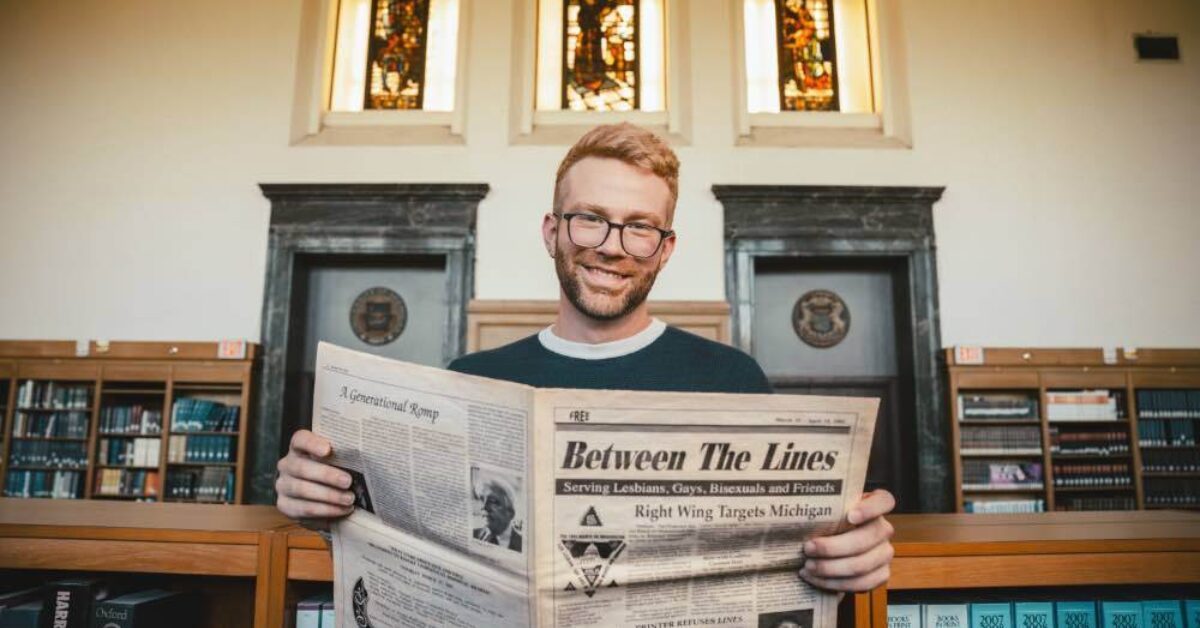

The October issue marks a new era for Between The Lines. After 33 years as a newspaper, Pride Source's flagship publication now arrives as a glossy monthly magazine, featuring photography with greater impact and more room to showcase the kind of in-depth stories our team has always been proud to tell.
Benjamin Jenkins started at Between The Lines as an intern, writing the paper's calendar pages. Sixteen years later, as publisher, he calls the shift to a monthly magazine format the biggest change he's seen since then.
"We've spent several months looking at how newsprint is changing, how print at large is changing and what our readers want," Jenkins says. "The more we asked those questions, the clearer it became that readers hold on to things that feel more permanent, with higher quality. We want it to feel like it's curated with the love and dedication our team has for the stories we put together."
Jenkins felt that history firsthand this month during a visit to the University of Michigan's Hatcher Graduate Library to photograph the paper's very first issue for this transition.
"Going to pick up that first issue really put a point on the legacy of the last 33 years," he says. "The librarian who helped us, Julie Herrada, started that job in 1994. She's seen nearly every issue come into the archive since, and she recognized Michigan State University professor and LGBTQ+ historian Tim Retzloff's byline attached to a key article in that first issue. He's still writing for us today."
Between The Lines' back issues live in U-M's Joseph Labadie Collection, one of the oldest and most comprehensive archives of its kind in the country, documenting more than a century of social movements including labor organizing, civil rights and LGBTQ+ history. Labadie, a well-known Detroit labor leader, donated his personal library to the university in 1911. Herrada trained under longtime curator Edward Weber, who led the collection for 40 years and died in 2006. Weber was interviewed for that very first 1993 issue of Between The Lines, reflecting on his early years in Ann Arbor's gay community. Pride Source has covered his legacy since through the reporting of Michigan LGBTQ+ historian Retzloff, the same contributor Herrada spotted in that very first issue.
Flipping through that issue together, Jenkins and Herrada reflected on its cover story: "Right Wing Targets Michigan."
"As Julie pointed out, that cover could run today," Jenkins says. "Our shift to a monthly glossy magazine is a big change, but I think it reflects what we're seeing everywhere. There are so many local publications changing or closing, struggling with the challenges of the moment. We think this move meets that moment, giving us a chance to reconnect with readers, refresh how we tell these stories and reflect where the community is today."
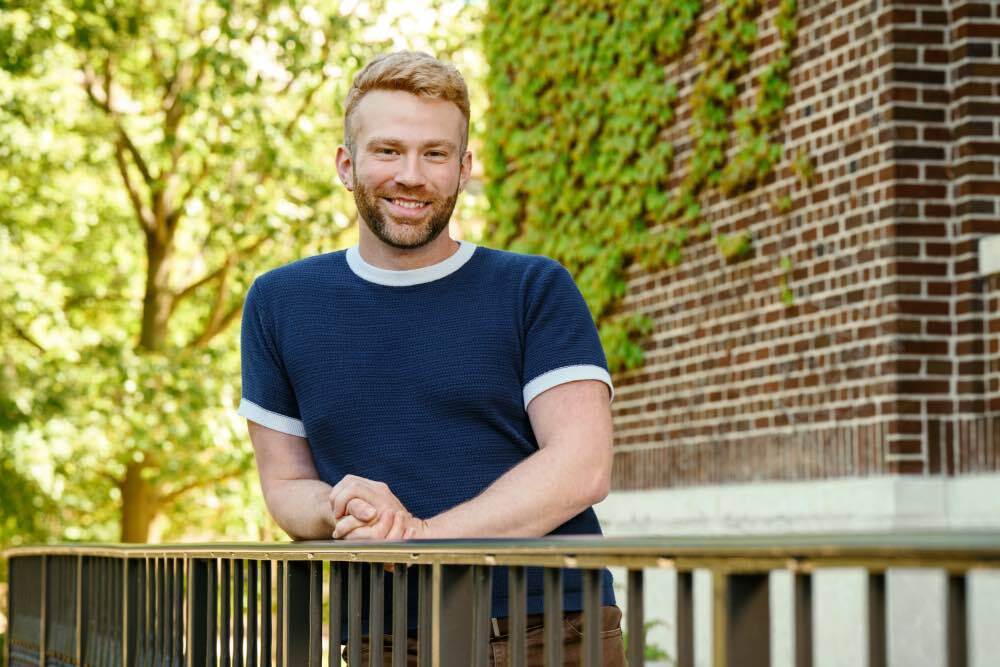
Jenkins' roots in queer advocacy run deep. A Michigan native raised in Garden City, he studied socioeconomic American history at the University of Michigan-Dearborn, where he found his footing as executive director of the campus Gender and Sexuality Alliance, growing it from a small club into one of the university's largest student organizations. Under his leadership, the group built out extensive programming, arranged for on-campus testing services and brought Gene Robinson, the first openly gay bishop in the Episcopal Church, to speak with students. He also worked closely with the university's provost at the time, who was openly gay himself.
That early organizing would go on to inform Jenkins’ path into journalism. In 2011, he examined Eastern Michigan University's employment and affirmative action policies and found language that functioned as a loophole. He brought it to the university's attention, and the policy was amended soon after.
"That was a formative moment for me, understanding the impact we could have," Jenkins says.
The paper's steadfast commitment to standing firm against the same fights, decade after decade, is something Jenkins carries into how he leads today. After his 2010 internship, he was hired on as the publication’s first art director, then left to build a career in marketing. In 2015, he founded Merithot, the Ann Arbor marketing agency he still owns, all while continuing to design nearly every issue along the way as a freelancer. When publishers Jan Stevenson and Susan Horowitz began thinking about retirement in the early months of the Covid pandemic in 2020, they turned to him.
"We'd meet socially distanced on their back porch, masks on, and talk about it for probably six months before making the announcement," Jenkins recalls. "It felt really cool to come back home."
Pride Source has changed hands only a handful of times since its founding. Between The Lines began in 1993 out of MaxZine Weinstein's Ann Arbor bedroom, co-founded with David Rosenberg, a University of Michigan Medical School dropout who taught Weinstein how to use newspaper design software and helped put up some of the money to print the first issue. The two laid out that debut issue at the university's computer center.
Ownership has passed from Weinstein to community members Shannon Rhoades and Julie Enzer, who owned the publication for a short time, to married lesbian couple Horowitz and Stevenson, and then to Jenkins, its current sole owner.
The move to glossy also comes weeks after editors at The Advocate, Out and other equalpride-owned brands publicly pressed their parent company for answers after reports surfaced that a newly appointed board member had expressed open support for President Donald Trump and the MAGA movement. The controversy laid bare how much LGBTQ+ media has consolidated under single ownership.
"All three brands had to publicly address it," Jenkins notes. "It really underscored that they all bubble up to one organization. Meanwhile, PinkNews has been moving toward a newsroom that runs largely without reporters, leaning on AI-generated content instead. There's an opportunity for us to fill a need for truly independent journalism that's queer-owned, operated and focused."
The through line of what we do is connecting people with their community, people with supportive businesses and people with people. We'll keep building on that legacy in this next chapter.
Pride Source/Between The Lines publisher Benjamin Jenkins
Jenkins doesn't have to look far for proof of what that independence makes possible. In 2025, Pride Source published an investigative story about Evan Lakatos, a Muskegon man convicted after a fake Grindr profile was used to arrest him in a police sting, reporting that found officers had violated their own protocols and disproportionately targeted gay men using dating apps. An amicus brief in the related Michigan Supreme Court case, People v. Jade, cited the investigation. The court's July 2026 ruling directly acknowledged that pattern of targeting and clarified the entrapment standard, giving Lakatos and others caught in similar stings stronger legal footing as their cases continue. The story also earned Pride Source a first-place Detroit Society of Professional Journalists award.
"That story is exactly why we exist," Jenkins notes. "A reporter who doesn't understand this community might not catch what was actually happening in those messages, or why it mattered. We did, and it ended up shaping how entrapment law gets applied in Michigan. That's the kind of impact I want this publication to keep pursuing."
Because Jenkins splits his time between Pride Source and Merithot, he leans on a staff he's trusted for years to help carry the publication forward. "Having people I've known this long, people I trust, who can be the face of the publication in their own right makes this all work," Jenkins says. "It's a coalescing of people who've done really good things together for a long time."
Advertisers have taken notice, too. "Most everyone has been excited about what this means for how people experience the magazine, how long they hold onto it and the opportunity that gives our advertising partners to reach the community," Jenkins says. "They're big lovers of the newspaper format, and so are we," he adds. "Our longtime advertisers are eager to see how we'll honor the paper's legacy while giving them new ways to reach readers."
Much of that energy is landing online. Pride Source’s website, pridesource.com, is rolling out an expanded, modernized business directory, an online hub for LGBTQ-owned and LGBTQ-friendly businesses across Michigan, giving advertising partners fresh, meaningful ways to connect with the community. "We want it to actually help people find what they need, since it's sometimes felt buried, and give businesses more ways to show up for readers," Jenkins says. Readers can already find a new direct donation option online, with subscription packages and expanded digital photo galleries on the horizon.
There's a full-circle moment in the mix as well. The events calendar Jenkins is bringing back to life on the website, already pulling in a steady stream of reader submissions, is the very job that first got him hired as a paper intern all those years ago. Podcasts and video are among the formats he's eyeing next.
"I think the through line of what we do is connecting people with their community, people with supportive businesses and people with people," Jenkins adds. "We'll keep building on that legacy in this next chapter."
What to know at a glance
Why is Between The Lines switching from a newspaper to a magazine?
Publisher Benjamin Jenkins says months of studying changes in newsprint and reader habits showed that readers keep publications that feel permanent and higher quality. The glossy monthly format allows bigger photography and more room for in-depth features as local publications close or change.
Who owns Pride Source now?
Benjamin Jenkins is the sole owner. He started as a Between The Lines intern writing calendar pages in 2010, became the paper's first art director, then founded the Ann Arbor marketing agency Merithot in 2015. He took over when Jan Stevenson and Susan Horowitz retired, a change in ownership announced in 2021.
When did Between The Lines start and where are the old issues?
Between The Lines began in 1993 out of MaxZine Weinstein's Ann Arbor bedroom, co-founded with David Rosenberg. Back issues live in the University of Michigan's Joseph Labadie Collection, an archive documenting labor organizing, civil rights and LGBTQ+ history. Historian Tim Retzloff, who had a byline in the first issue, still writes for the publication.
What is changing on pridesource.com?
The site is rolling out an expanded, modernized directory of LGBTQ-owned and LGBTQ-friendly businesses across Michigan and reviving the events calendar. A direct donation option is already live, with subscription packages and expanded digital photo galleries planned. Jenkins is also considering podcasts and video.
Get Pride Source in your inbox
Michigan LGBTQ+ news, arts and community, free once a week.
It’s free, and you can unsubscribe any time (privacy policy).
Read More

Before Christian Styles, There Was Zack: Friends Remember the Man Beyond the Porn Star
Editor's note: Pride Source is identifying some people interviewed for this story by first name only to protect their privacy, at their request.To more [...]Read more about Before Christian Styles, There Was Zack: Friends Remember the Man Beyond the Porn Star

Queer News In Brief: Affirmations Honors Local Leaders, Give Like Dolly Day, Calvin U. Same-Sex Wedding Case Hits the Michigan Supreme Court
Fall is filling up fast across Michigan's LGBTQ+ community. This weekend, Affirmations hands out its annual Aff Five Awards to a lineup of longtime [...]Read more about Queer News In Brief: Affirmations Honors Local Leaders, Give Like Dolly Day, Calvin U. Same-Sex Wedding Case Hits the Michigan Supreme Court

Remembering Sharon Hughes, Drag Queen Nickki Stevens' Mom and Gigi's Beloved 'Purple Angel'
Sharon Hughes, the mother of Detroit drag icon Nickki Stevens and a fixture at Gigi's Gay Bar for nearly 30 years, died Saturday, Sept. 19. She was 80.Her [...]Read more about Remembering Sharon Hughes, Drag Queen Nickki Stevens' Mom and Gigi's Beloved 'Purple Angel'
Michigan LGBTQ+ Fall Arts Guide: Theater, Music and Exhibits
Michigan art organizations are spending the fall inviting audiences to explore identity, community and discovery — whether through a new musical about astronaut [...]Read more about Michigan LGBTQ+ Fall Arts Guide: Theater, Music and Exhibits

History Wheel: The '00s - 2004
February – Detroit Public Schools CEO Creates Task Force, Looks at LGBT Student Issues: In response to a community town hall, Detroit Public Schools CEO Dr. [...]Read more about History Wheel: The '00s - 2004
In First, Transgender Troops Testify about Military Service on Capitol Hill
A hearing on Capitol Hill Wednesday became a veritable tale of two cities as transgender troops testified about their commitment to military service while [...]Read more about In First, Transgender Troops Testify about Military Service on Capitol Hill
More in Michigan LGBTQ+ Leaders
This Year, Everything Is on the Ballot
Pride Month is here. Along with celebrating our authentic selves, I think of June as a time to celebrate how far we have come — and how far we still need to [...]Read more about This Year, Everything Is on the Ballot

Baddie Brooks Is Back — and Ready for Her Biggest Stage Yet
Baddie Brooks has had a lot of firsts. The first Black trans woman from Detroit to serve as Grand Marshal at the NYC Pride March in 2024. One of the first [...]Read more about Baddie Brooks Is Back — and Ready for Her Biggest Stage Yet

Supreme Court Chooses Cruelty Over Evidence in Transgender Passport Case
Like so many others, I was heartbroken by the U.S. Supreme Court's decision that allows the Trump administration to enforce its executive order denying [...]Read more about Supreme Court Chooses Cruelty Over Evidence in Transgender Passport Case

When Backlash Triggered Pushback: A History of LGBTQ+ Resilience in Michigan
What LGBTQ+ Michiganders — and all Americans — are living through in 2025 with the bombardment of attacks on our community is, in many ways, all too familiar. [...]Read more about When Backlash Triggered Pushback: A History of LGBTQ+ Resilience in Michigan