Abdul El-Sayed Wins Michigan Senate Primary as LGBTQ+ Candidates Make Historic Gains
Physician's narrow victory sets up competitive fall race; Joanna Whaley poised to become Michigan's first trans state representative
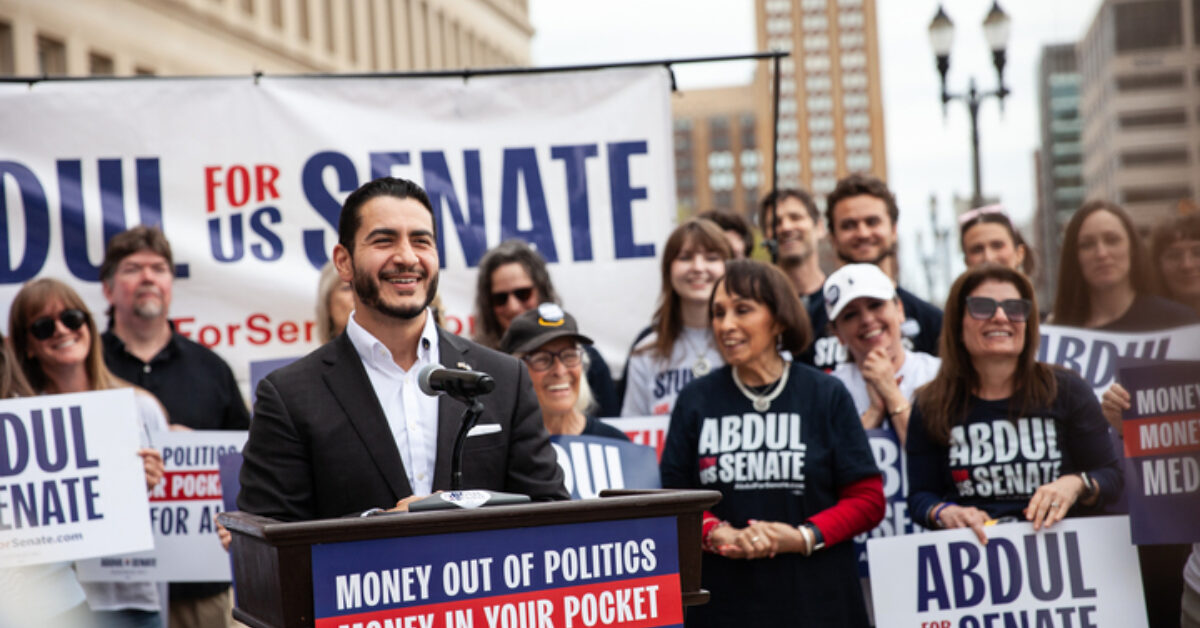

Dr. Abdul El-Sayed won Michigan's closely watched U.S. Senate Democratic primary Tuesday with 49% of the vote, narrowly edging out moderate U.S. Rep. Haley Stevens' 47% in a race that became a proxy battle between the party's progressive and establishment wings. El-Sayed, backed by U.S. Sen. Bernie Sanders and Rep. Rashida Tlaib, will face Republican former U.S. Rep. Mike Rogers in November as the Democratic nominee to fill the seat vacated by retiring Sen. Gary Peters.
The Senate primary captured national attention as a test of progressive power within the Democratic Party. Stevens, who received backing from national Democratic leadership and AIPAC as well as a last-minute endorsement from Gov. Whitmer, mounted a spirited challenge that left the race close enough that several major news outlets continued reporting it as "too close to call" as ballots were still being counted Wednesday morning.
"I want the community to know that I intend to be a lion for rights. When somebody's coming for you, I intend to stand in the cut to protect you," El-Sayed told Pride Source ahead of the primary, promising unequivocal support for LGBTQ+ rights even when unpopular. His public health background informs his commitment to protecting trans health specifically. "The Trump administration has tried to weaponize government against LGBTQ+ folks in a space that I know really well, which is health. My hope is to use my specific expertise in the Senate to make sure that I'm undoing a lot of the worst things that the Trump administration has done when it comes to targeting LGBTQ+ health."
In the governor's race, Secretary of State Jocelyn Benson dominated the Democratic primary with 83%of the vote, setting up a general election matchup against Republican U.S. Rep. John James, who edged businessman Perry Johnson to win the GOP primary with 50% of the vote. Speaking to Pride Source ahead of the primary, Benson emphasized her record protecting LGBTQ+ rights at the state level. "To me, this is about building a state where every person feels safe, seen, supported and welcome. That's the Michigan I believe in, and that's the Michigan I'm fighting for," she told Pride Source.
In Michigan's U.S. House District 11, State Sen. Jeremy Moss won his Democratic primary with 49.2% of the vote, positioning him to likely succeed Stevens in a heavily Democratic seat covering the Oakland County communities of Auburn Hills, Ferndale, Pontiac, Royal Oak, Troy, West Bloomfield Township and Wixom. Moss, Michigan's first openly gay state senator, has been a key voice on LGBTQ+ rights in the state legislature.
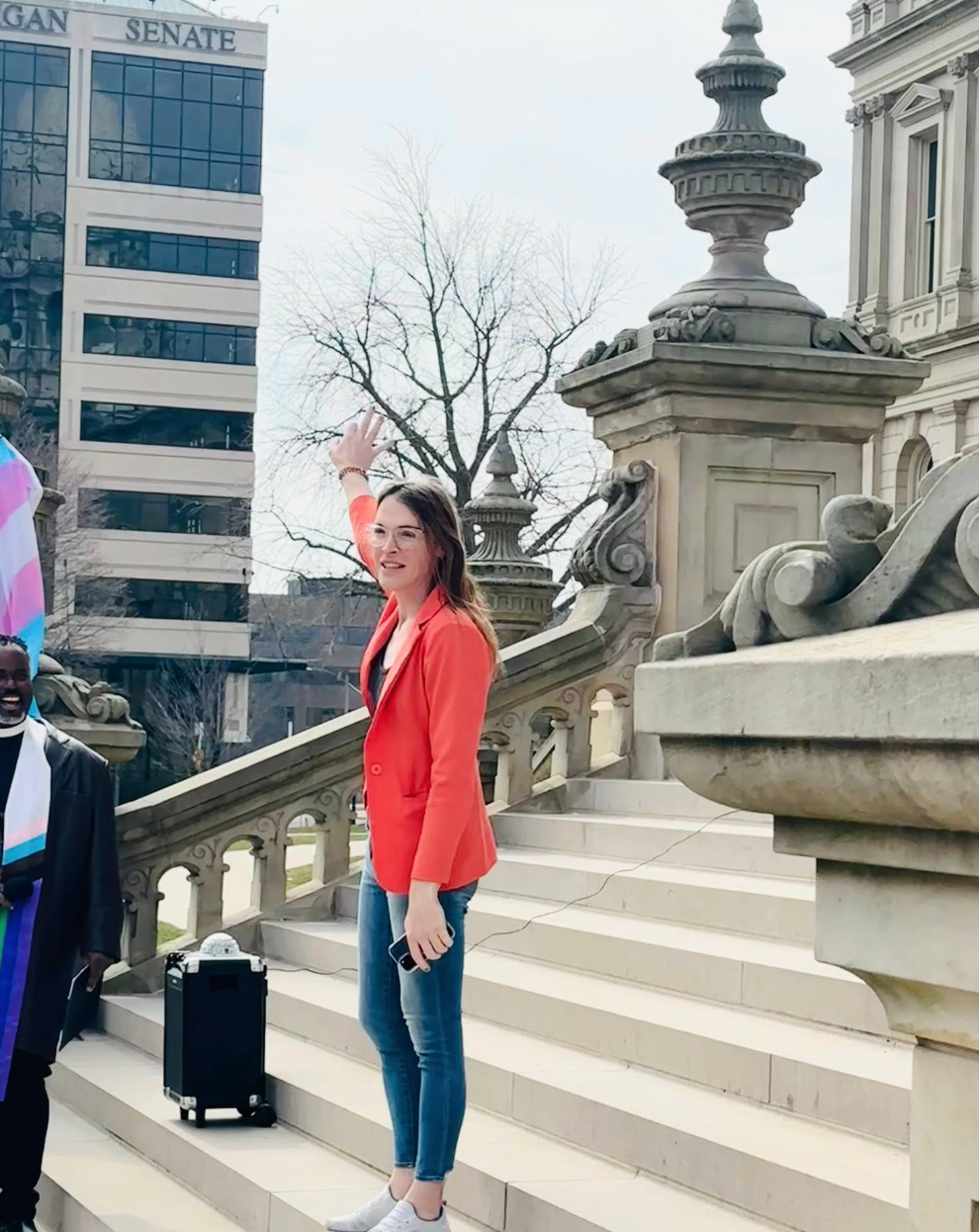
Perhaps the night's most significant result for LGBTQ+ representation came at the state level, where Joanna Whaley, a trans woman from Allen Park, won the House District 2 Democratic primary with 66% of the vote, defeating former state lawmaker Frank Liberati. The Downriver district includes Lincoln Park, Melvindale and Southgate. If she prevails in November's general election in the safely Democratic district, Whaley will become Michigan's first openly transgender state House member. "To all the volunteers and supporters, let's take this energy into the general election and bring focused leadership to our community," Whaley wrote after her victory.
Liberati had filed a legal challenge in May alleging Whaley violated campaign law by not listing her deadname on her affidavit, but Wayne County Clerk Cathy M. Garrett rejected the complaint. Whaley said the attack only strengthened her campaign. "Every time Frank tries to come after me, our campaign just gets stronger," she told Pride Source earlier this year. "I'm just here trying to talk about getting our utility bills down and getting single-payer health care in the state of Michigan."
Seven LGBTQ+ candidates win state office races
Tuesday's primary delivered victories for seven of 12 featured LGBTQ+ candidates running for state office, suggesting growing political power for the community even as several challengers in competitive races fell short.
Jason Hoskins decisively won the Democratic primary for State Senate District 7, covering Oakland County communities including Southfield, with 28,886 votes, 57% of the total. Hoskins, an incumbent state representative and the first LGBTQ+ person of color elected to Michigan's state legislature, enters the general election favored to expand LGBTQ+ representation at the upper chamber level.
Sitting LGBTQ+ state representatives capitalized on name recognition and constituent service records. Mike McFall won House District 14, a Detroit-area seat, with 71% of the vote. Laurie Pohutsky, Michigan's first openly queer female lawmaker, dominated her House District 17 primary in Oakland County with 99.26%of the vote. Emily Dievendorf, the state's first openly nonbinary state representative, ran unopposed in House District 77, covering Lansing and surrounding Ingham County areas, and won with 1,222 votes.
Chris Gilmer-Hill claimed 49% in House District 8's Democratic primary in Macomb County, edging out incumbent Helena Scott (43%) and two other candidates. Jenn Cornell advanced her political career, securing 56% (5,110 votes) in Ann Arbor's City Council Ward 5 race against challenger Greg Monroe. Elisabeth Dery secured 41% in Oakland County's three-way Probate Court Judge race, outpacing Jessica Ann Hallmark (38%) and Sheila Calvary Worthy-Williams (21%) to become the Democratic nominee for the bench.
Other LGBTQ+ candidates fell short in Tuesday's primary. Amanda Treppa, a bisexual candidate running for State Senate District 10 with backing from Equality Michigan Action Network and Planned Parenthood Advocates of Michigan, did not advance despite endorsements from outgoing State Sen. Mallory McMorrow. Brendan Johnson, running for State Senate District 9 in Oakland County, also failed to win his race. J. Aaron "Lola" Bailey, a trans candidate and democratic socialist in House District 92, lost to Hanna Demerath. Toni Mua's campaign for House District 9 in Detroit similarly came up short.
The August primary reshuffled Michigan's political deck. November will determine which candidates advance to the state House, Senate and Congress, and whether LGBTQ+ political power continues its upward trajectory. Follow our coverage to keep up on LGBTQ+ candidates and issues impacting this race, and check vote411.org for your sample ballot and voting information.
Read More
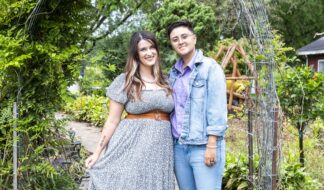
A Michigan Farm Stand Became a Safe Haven for LGBTQ+ People in Rural America
On a farm stand in Charlotte, Michigan, in a county that voted for Donald Trump by a wide margin in 2024, Sarah and Kim Padilla hung a Pride flag and waited to [...]Read more about A Michigan Farm Stand Became a Safe Haven for LGBTQ+ People in Rural America

Trump Is Targeting the Smithsonian. My LGBTQ+ History Is Inside It.
There’s been something troubling me for the last couple of years about what the Trump administration has been doing. It affects me personally, but I’ve mostly [...]Read more about Trump Is Targeting the Smithsonian. My LGBTQ+ History Is Inside It.
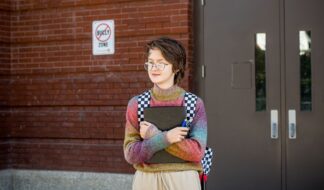
A Lifeline for LGBTQ+ Students in Michigan Schools Is Running Out of Money
For 25 years, the Michigan LGBTQ+ Students Project has worked to make schools safer for the state's LGBTQ+ youth, at a moment when many of those students [...]Read more about A Lifeline for LGBTQ+ Students in Michigan Schools Is Running Out of Money
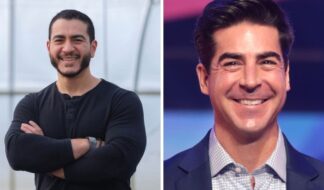
El-Sayed Turns Tables on Watters in Fiery Fox News Clash Over Trans Healthcare
Michigan Democratic Senate candidate Abdul El-Sayed used an unlikely question to expose what he called conservative hypocrisy on medical decisions for minors, [...]Read more about El-Sayed Turns Tables on Watters in Fiery Fox News Clash Over Trans Healthcare

Aug. 22, 2002: A ‘Wilde’ Celebration Planned for Local Theater Community
While a handful of theaters embraced our coverage from the beginning, others did not.

November 2000: Voter Guide 2000
We figured we could educate voters on what people really stood for and who liked them.