Michigan’s Queer Political Power: What 50 Years Built — and Why 2026 Could Undo It
From one council seat in 1974 to leaders like Dana Nessel and Jeremy Moss today, the state’s queer political arc has been neither straight nor steady
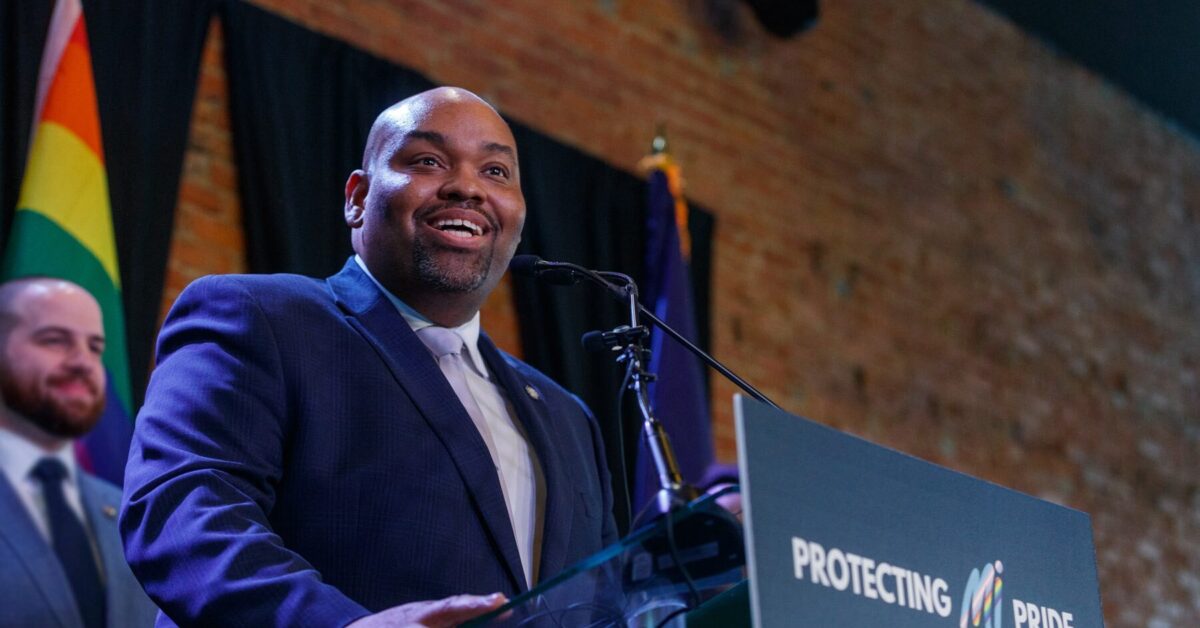

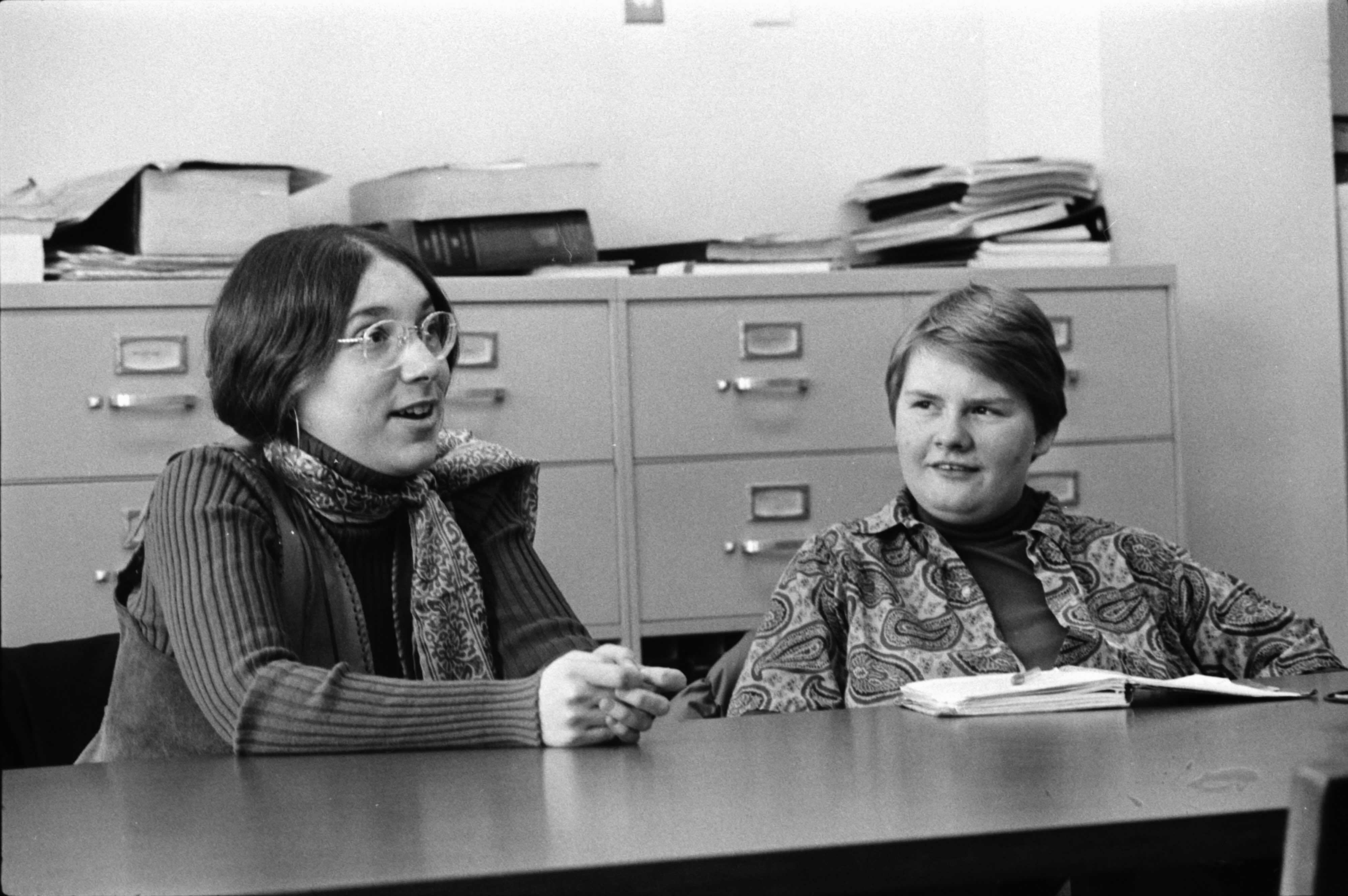
Three years before Harvey Milk's ceiling-shattering victory in San Francisco, a 21-year-old from Plymouth, Michigan, accomplished one of the most defining moments in queer political history. Kathy Kozachenko ran for Ann Arbor City Council as an activist, a student leader and a lesbian — and she won.
Widely recognized as the first openly LGBTQ+ person elected to public office in the United States, Kozachenko's victory was a watershed moment. It offered something radical for its time: proof that queer people could not only participate in politics, but win as their authentic selves.
That spark did not ignite a straight line of progress. It lit a fire that has flared, dimmed and, at times, nearly burned out.
From Kozachenko's 1974 victory to the passage of one of the nation's most restrictive constitutional amendments banning same-sex marriage in 2004, to the long-awaited expansion of the Elliott-Larsen Civil Rights Act in 2023, Michigan's arc of queer political power has bent in multiple directions. In a state often defined by its "purple" political makeup, neither bright red nor brilliant blue, LGBTQ+ Michiganders have experienced both some of the country's most exclusionary policies and some of its most meaningful advances.
Building power, fighting exclusion
When Michigan passed the Elliott-Larsen Civil Rights Act in 1976, just two years after Kozachenko's election, it was hailed as one of the most comprehensive anti-discrimination laws in the country. It prohibited discrimination based on religion, race, color, national origin, age, sex or marital status.
But LGBTQ+ people were not included.
The omission would define the next several decades of advocacy, litigation and political organizing. For queer Michiganders, the law stood as a reminder of deliberate exclusion.
Advocates like Ruth Ellis, born in Springfield, Illinois in 1899 and long rooted in Detroit, carried the fire in ways no legislation could. For decades, her home served as an informal gathering place for Black LGBTQ+ Detroiters who had nowhere else to go — a living room that became a lifeline, years before the term "community center" entered the vocabulary of queer organizing. Ellis lived to 101, her life spanning Jim Crow, Stonewall and the dawn of marriage equality. While politicians debated who deserved recognition, people like Ellis ensured survival. Her namesake center in Detroit carries that work forward today, providing support to LGBTQ+ young people.
By the early 2000s, however, the political climate had hardened.
"It was very tough in our state in regards to LGBTQ+ rights because you didn't have the executive branch supportive, you didn't have the legislature supportive, and you had a very activist conservative court that was not supportive," Jay Kaplan, staff attorney for the ACLU of Michigan's LGBTQ+ Project, told Pride Source.
Kaplan joined the project in 2001, after years of working in disability rights and HIV/AIDS advocacy. At the time, he said, Michigan’s legal framework didn't just fail to protect queer people, it actively worked against them.
In 2002, the chief judge of Washtenaw County, Archie Brown, ordered judges to stop granting second-parent adoptions to same-sex couples. Two years later, then-Attorney General Mike Cox issued an opinion stating that same-sex couples legally married elsewhere could not jointly adopt children in Michigan.
Soon after, voters approved Proposal 04-2, a constitutional amendment defining marriage strictly as between one man and one woman. It passed by a wide margin, cementing Michigan's reputation as one of the most hostile states in the country for LGBTQ+ families.
In 2014, Rolling Stone ranked Michigan in their top five worst states for LGBTQ+ people. No legal protections from hate crimes or discrimination, no hope for marriage equality, no family rights and a legacy of obstacles at every level.
So what changed?
The shift: from margins to the legislature
By 2014, in all the places where queer people were brave enough to fight for a seat, the groundwork for change was being laid. That year, then-state Reps. Jeremy Moss and Jon Hoadley formed Michigan's first LGBTQ+ legislative caucus, a group of two. It was small, but it marked a shift: queer representation was no longer an idea. It was structural.
Over time, cultural attitudes evolved alongside political strategy.
"I spent years watching the resources of this office be used to delay and denounce necessary, legal protections for residents in my state, just like me. I realized then more than ever Michigan needed an attorney general who would protect, instead of persecute, families like mine."
— Michigan Attorney General Dana Nessel
"We have infrastructure now to influence elections like we never had in the past," said Tim Retzloff, an assistant professor at Michigan State University who has documented LGBTQ+ history across the state. "Queer political breakthroughs have been a motivator politically for certain segments of the voting population."
Legal victories accelerated that momentum. The 2015 U.S. Supreme Court's decision in Obergefell v. Hodges legalized same-sex marriage nationwide, reshaping the legal landscape that Michigan had once helped restrict. Kaplan sees that transformation clearly.
"We're no longer looked at as a lost state. We're no longer looked at as a place people leave," he said.
After years of being beaten back, the fire was spreading again.
In 2018, when Dana Nessel was elected attorney general, becoming the first openly LGBTQ+ person elected to statewide office in Michigan. "My predecessor as Michigan Attorney General was the opposing party on the Obergefell case, spending our state’s tax dollars to argue that my wife and I didn't deserve the right to get married or jointly adopt our children," Nessel told Pride Source.
Her victory represented more than a single election. It signaled that LGBTQ+ candidates could not only compete statewide but also win even in a politically divided state.
"I spent years watching the resources of this office be used to delay and denounce necessary, legal protections for residents in my state, just like me. I realized then more than ever Michigan needed an attorney general who would protect, instead of persecute, families like mine," Nessel added.
The present moment: power and precarity
Today, Michigan has the largest LGBTQ+ legislative caucus in its history, with seven openly queer lawmakers serving in the state legislature. Their presence has already reshaped policy outcomes.
In 2023, Michigan expanded the Elliott-Larsen Civil Rights Act to include sexual orientation and gender identity, a change nearly 50 years in the making.
"Our most vulnerable LGBTQ+ community members really needed non-discrimination desperately. Elliott-Larsen was huge because it was such a long-fought battle," said state Rep. Emily Dievendorf. "We know philosophically and spiritually that fighting for love and the ability to live authentically is both the bare minimum and also something that nobody else should care to interfere with in our lives."
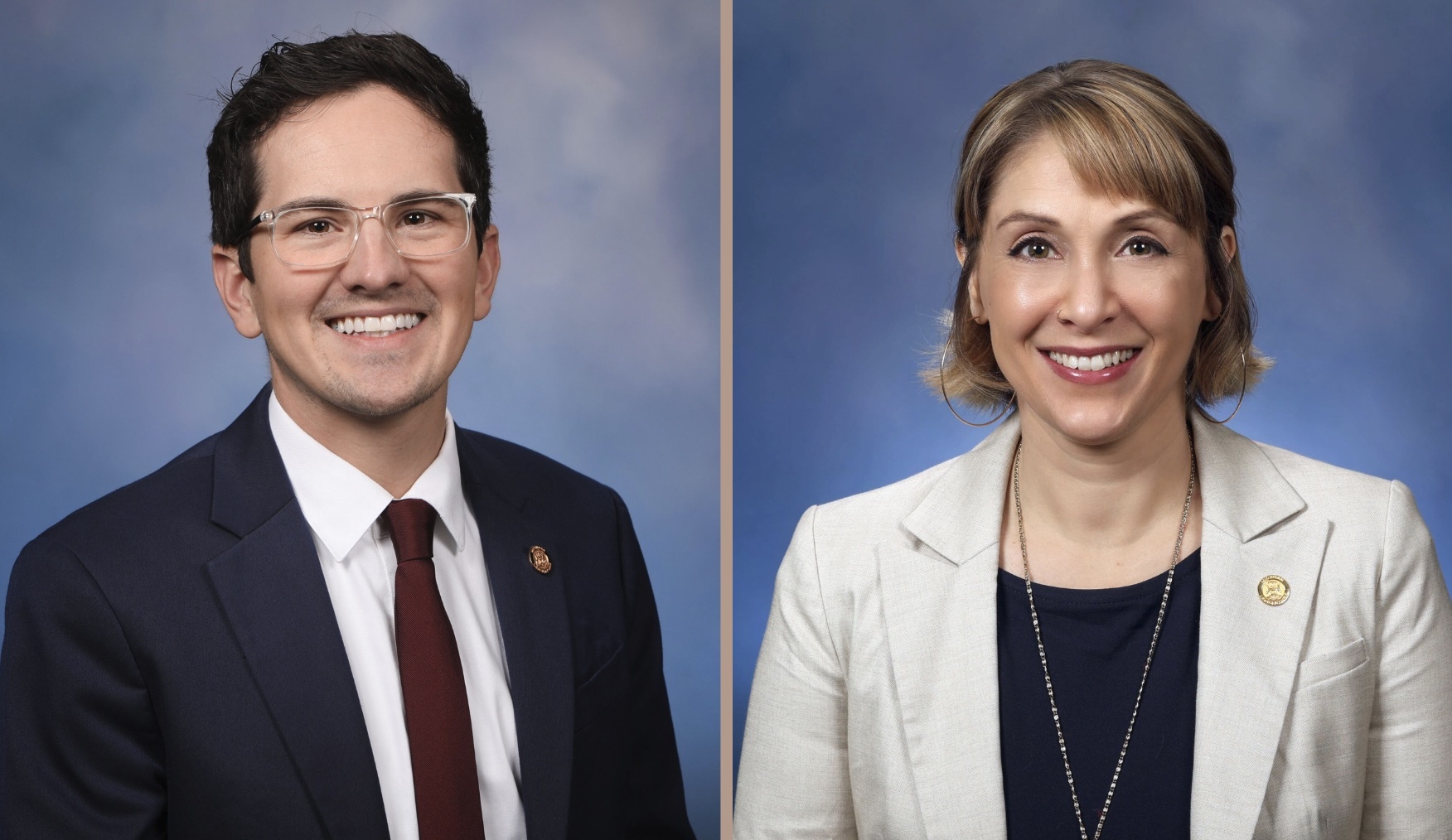
Rep. Dievendorf, Michigan's first nonbinary legislator, was part of the coalition that helped push the expansion forward, alongside lawmakers like state Sen. Jeremy Moss, who sponsored the legislation.
"We took the helm with a pro-equality majority in the legislature for the first time. And it was a very significant deal to be recognized in that law after a long struggle and ensure that if somebody is discriminated against at work, in their housing, in publicly available spaces, there's a remedy for justice," Moss told Pride Source.
For Moss, who became Michigan's first openly gay state senator in 2018, this moment is less a culmination than a continuation. Proof of what representation can build over time, and how quickly it can be tested. His current run for Congress, where he could become the first openly LGBTQ+ person to represent Michigan at the federal level, reflects a shift that once felt out of reach.
"For decades, queer people weren't just excluded from power. They were erased from culture, from institutions, from the story of what it meant to belong," said state Rep. Jason Morgan. "I want to make sure that we are never to be made invisible or made to feel less than because of our identities ever again. And the strongest way to do that is to have a seat at the table as decisions are being made."
LGBTQ+ representation in Michigan is no longer something that happens after the fact, or quietly, or at the margins. It has begun to reshape the internal culture of political power itself — visible, present and, increasingly, unapologetic.
"During my lifetime, people might come out, but in a lot of cases, it was after they were done serving. And now that's not the case. Now, there are people who I serve with who are openly and vibrantly living out," said state Rep. Laurie Pohutsky. "I really love the defiance that comes in refusing to back down and to just live authentically and to serve your community authentically."
And yet, that visibility exists alongside a growing sense of vulnerability, a recognition that progress, no matter how hard-won, is not self-sustaining.
"The Republicans have already been talking about rolling back a lot of the legislation that we've passed, whether it's around LGBTQ+ people or our environmental protections or our gun legislation," said state Rep. Mike McFall. "I do feel like this is a time in Michigan [when] if we do not take back the House and if we do not maintain a way to stop Republicans, they will roll back everything, all of the progress that we have made."
The ACLU is currently tracking 517 anti-LGBTQ+ bills across the country, 22 of which have been introduced in Michigan. In March 2026, the Supreme Court sided with a Christian therapist, striking down a law banning conversion therapy in Colorado. In February 2026, every trans person who had updated their official gender marker in Kansas had their IDs and birth certificates invalidated. Since taking office in 2025, President Donald Trump has attacked queer people with a slate of executive orders targeting transgender youth, healthcare accessibility, gender-affirming care and much more.
"I think it felt like for a minute these rights were untouchable," Moss said. "And now it just seems like it's a backslide because they're talking about us. They're talking about trans rights. They're talking about LGBTQ+ youth. They're demonizing LGBTQ+ people. They're waging campaigns on our backs."
Nessel sees the same pattern emerging.
"We're on the other side of that wave of progress, and we're starting to watch it recede, through national sentiment, through egregious rulings by SCOTUS; it does feel like there's another shift underway," Nessel said. "The Trump administration has made no secret about its animosity towards the transgender community and LGBTQ+ rights in general. The landscape of LGBTQ+ protections has developed very quickly over the last decade or so, but that progress may disappear just as quickly if we don't stand strong together in this moment."
What comes next
The question now is not whether queer people can win office in Michigan. That barrier has been broken repeatedly. The question is what that power can withstand.
Every member of Michigan's LGBTQ+ legislative caucus faces reelection in 2026. The margins remain thin. The political environment remains volatile.
"It's still concerning that there could either be multiple LGBTQ+ people in the Senate or there might not be any. There might be two LGBTQ+ people of color in the Senate or, again, there might not be any," Rep. Jason Hoskins noted. "We just need to continue to build power ... we need to continue to be at the table."
Hoskins, the first Black LGBTQ+ person elected to the Michigan Legislature, represents both the expansion of representation and the stakes of losing it.
Fifty years after Kathy Kozachenko's victory, queer political power in Michigan is no longer an aspiration. It's a fact — and a target.
The fire Kozachenko helped ignite is still burning, but not as a steady flame — as something more dynamic. It surges. It flickers. And in moments like this one, it demands tending.
"You yourself may not be a political person, but your identity has been politicized. To pretend otherwise is irresponsible," Nessel said. "If we stick our heads in the sand and ignore the world around us, then we won't get a say in what comes next. It will be up to the next generation of LGBTQ+ leaders to capitalize on the momentum we've built in order to propel us forward."
Read More

A Lifeline for LGBTQ+ Students in Michigan Schools Is Running Out of Money
For 25 years, the Michigan LGBTQ+ Students Project has worked to make schools safer for the state's LGBTQ+ youth, at a moment when many of those students [...]Read more about A Lifeline for LGBTQ+ Students in Michigan Schools Is Running Out of Money
El-Sayed Turns Tables on Watters in Fiery Fox News Clash Over Trans Healthcare
Michigan Democratic Senate candidate Abdul El-Sayed used an unlikely question to expose what he called conservative hypocrisy on medical decisions for minors, [...]Read more about El-Sayed Turns Tables on Watters in Fiery Fox News Clash Over Trans Healthcare
$360,000 and Counting: School Districts Are Spending Big Bucks to Fight Anti-Trans Lawsuits
This story first appeared on Uncloseted Media. Editor's note: As a fellow queer independent outlet, we admire the kind of deep, sustained journalism [...]Read more about $360,000 and Counting: School Districts Are Spending Big Bucks to Fight Anti-Trans Lawsuits
Christian Styles, Metro Detroit Adult Performer, Dies at 29
Christian Styles, a gay adult performer and content creator with Michigan roots, has died at 29. His family confirmed his death in an obituary stating he passed [...]Read more about Christian Styles, Metro Detroit Adult Performer, Dies at 29

November 2000: Voter Guide 2000
We figured we could educate voters on what people really stood for and who liked them.
July 1, 1999: Crimes Are Very Similar: Murder Suspect Convicted of Killing Gay Man Exactly 20 Years Ago
Speaking to McCormick’s nephew, I learned how carefully the man who had marched with the likes of Rev. Dr. Martin Luther King, Jr. and Jesse Jackson had