Abdul El-Sayed Vows to Be a ‘Lion’ for LGBTQ+ Rights in Senate
Michigan's most progressive Senate candidate on allyship and why attacks on trans people threaten everyone
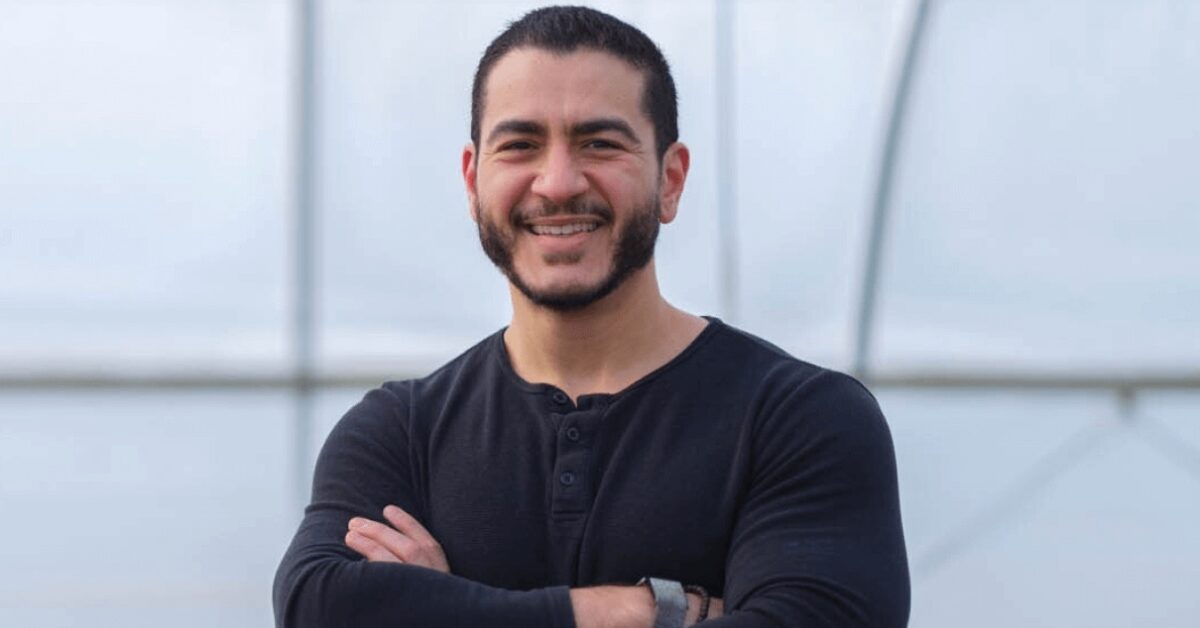

Dr. Abdul El-Sayed isn't running a typical Senate campaign, and at this point it's hard to miss. The physician and former health director for both the city of Detroit and Wayne County has spent the past several months drawing national headlines with an unapologetic case for progressive politics in a state Democrats need to win. He’s also been busy racking up the UAW endorsement, bringing Bernie Sanders to the campaign trail, and closing the polling gap in the primary race. He’s pulled into a dead heat against Rep. Haley Stevens in the RealClearPolling average, with state Sen. Mallory McMorrow trailing the two frontrunners — all while refusing every corporate PAC dollar in the race. Maryland Sen. Chris Van Hollen, a prominent progressive voice on civil rights and foreign policy, added his endorsement in late June. Editor's note: Sen. McMorrow withdrew from the race on July 5.
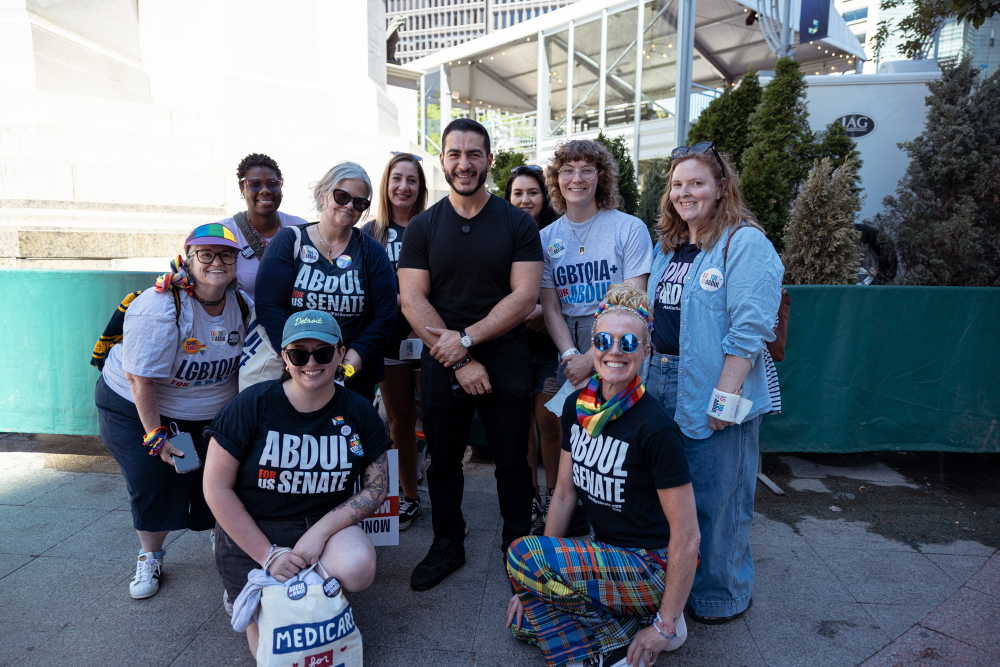
Many headlines focus on El-Sayed’s trademark take-no-prisoners bluntness. At the May debate on Mackinac Island, El-Sayed challenged his opponents to raise their hands if they'd never taken a check from Blue Cross Blue Shield. He raised his. They didn't. When Rogers' campaign fired off a cease and desist letter on June 22 demanding El-Sayed stop calling Rogers a pharma lobbyist, his campaign called it exactly what it was — an attempt to silence a surging candidate — and kept right on going.
For many analysts, Michigan’s race has become a genuine referendum on where the Democratic Party is headed. We wanted to know where El-Sayed stands on the issues our readers care about most — topics like healthcare, standing up to the Trump administration, the vulnerability of trans rights and what it actually looks like when a candidate shows up for the LGBTQ+ community, not just when it's easy.
How do you connect your own lived experience with the LGBTQ+ community's insight on performative allyship?
I'm kind of allergic to pandering. I can't tell you how many times we've had politicians come to iftar [the Ramadan fast-breaking meal], and they'll say, "I fasted in solidarity with you." And I'll say, “Solidarity? You think we're hungry? The food's right there. I need your solidarity when our community is being attacked for praying how we pray. I need your solidarity when it comes time to protect people from watching their tax dollars go and bomb people who look like them.” It's educated a lot of the way that I try to show up across different communities.
I don't know what it's like to be gay or to be trans, but I do know what it's like to be discriminated against. My job is to show up and be curious and understand what the unique manifestations of that kind of discrimination look like, but also to stand up when it's hard, not just when it's easy. And that's the thing I hope that folks will count on me for.
I'm always going to show up as who I am. I'm always going to be authentically interested in understanding experiences I might not share. And I'm always going to show up when someone attempts to take your rights — because I believe deeply in the kind of America where everybody's rights are respected to be who you are, whether that is to love differently or to identify differently than you were told you were supposed to.
Can you point to a specific example of that work during your time in Detroit and Wayne County?
One of the important pieces of our work in public health, both when I was in Wayne County and Detroit, is making sure that all of our resources and services were open and inviting for all of our residents. I ran the state's largest Ryan White program when I was [with] the City of Detroit. And then in Wayne County, I got to work with LGBT Detroit to bring them in to offer some training for our personnel, just to make sure that our services were as open, inviting, accepting and empowering as possible. I just really appreciated their partnership — and I know that the folks on our team really appreciated the opportunity to ask important questions, to understand better from a different perspective, to build community with folks.
The Trump administration has been explicitly anti-LGBTQ+, and especially anti-trans. As a senator, how would you fight back?
I think it's really important both to stand up with and for the community's rights and to be a vocal advocate — that we will not stand by while some people are thrown under the bus, that we demand that everybody has equal rights to be who they are. We need more federal protections on the books, particularly when it comes to healthcare.
Your campaign has drawn comparisons to New York City Mayor Zohran Mamdani's — another progressive insurgent who won by running a very unique kind of campaign. How do you feel about that comparison?
Every community is unique — I was born and raised here. We're running a campaign centered on the unique needs of our state. It's always flattering when people compare you to a winning politician — whether it's Barack Obama or Mayor Mamdani — but I'm really focused on how to meet the needs of our state and to do so the best way I can in the Senate. I love this state. I'm grateful to serve here, whether leading health departments in Detroit and Wayne County or hopefully leading for our state in the U.S. Senate.
You have a public health background that most senators don't. How does that shape your approach to the health-specific ways LGBTQ+ people are being targeted right now?
The Trump administration has tried to weaponize government against LGBTQ+ folks in a space that I know really well, which is health. You think about pulling funding for an HIV vaccine. You think about pulling funding for PrEP support. You think about a lot of the research that was being done at places like the CDC and funded through the NIH that had been targeted and brought offline. Those are lives that could be saved that might not be saved because of this heinous disinvestment in basic science. My hope is to use my specific expertise in the Senate to make sure that I'm undoing a lot of the worst things that the Trump administration has done when it comes to targeting LGBTQ+ health.
Gov. Gretchen Whitmer told Pride Source earlier this year that she's noticed formerly vocal allies going quiet on trans issues. You seem to be taking the opposite approach.
One of my trans endorsers told me something I'm never going to forget — it's important for us always to be inclusive, and if they're taking aim, don't show them where to fire. There's a reason that if I'm asked, I always say that I support trans rights because I believe in all rights. I want folks to see their own rights in the plight of a trans person who's being discriminated against.
The real question here isn't about whether or not we can discriminate against one group or another. The real question is whether or not we want a government that can discriminate against anybody at all. A government that is told that it's allowed to discriminate against some people and not others will eventually discriminate against any and all people for whatever reasons it chooses. We are all in the fight for an America whose government does not discriminate against any of us.
I say that as somebody who puts my face on the ground many times a day praying in the way that I pray as a Muslim. Not everybody has to understand why I do that, but I damn well expect that they're going to stand up for my right to do it. And similarly, you might not understand somebody else — but you work for their rights. We cannot build the relationships and love and community we need when government is weaponizing against any of us.
Is there anything else you want our readers to know?
I want the community to know that I intend to be a lion for rights. When somebody's coming for you, I intend to stand in the cut to protect you. We have to answer this broader question — do we want to live in the kind of America where we leave some of us behind, or do we want to live in the kind of America where we understand that government of the people, by the people, and for the people means all the people?
My job as a public servant is to stand up for folks. It's what motivated a lot of my efforts in Detroit and Wayne County to make sure that our services were deeply accessible and empowering of LGBTQ+ residents — and it's why I take the idea of protecting all of our rights so seriously.
Visitvote411.orgvote411.org to find your sample ballot and check your voter registration.
Read More

Inside Roses, the Shuttered Detroit Diner Aaron Rush Helped Turn into a New York Times Pick
There's a version of this story that starts with a list. Like many good stories, though, it's better to start at the bar, under a pressed-tin ceiling, [...]Read more about Inside Roses, the Shuttered Detroit Diner Aaron Rush Helped Turn into a New York Times Pick
HRC Endorses Abdul El-Sayed in Michigan's US Senate Race
The Human Rights Campaign PAC has endorsed Abdul El-Sayed in Michigan's U.S. Senate race, calling the Detroit Democrat a "pro-equality champion" [...]Read more about HRC Endorses Abdul El-Sayed in Michigan's US Senate Race
Michigan Pride Chamber Bets Big on Statewide Growth
Kevin Heard didn't set out to build a networking group. When he moved back to Detroit years ago, he noticed something missing: no organization existed to [...]Read more about Michigan Pride Chamber Bets Big on Statewide Growth

The 'CEO of Everything Gay' On How He Manages 68 Businesses and 6 Boyfriends
This article originally appeared on Uncloseted Media.Tristan Schukraft started his first business when he was 21, selling Razor scooters out of his pickup truck [...]Read more about The 'CEO of Everything Gay' On How He Manages 68 Businesses and 6 Boyfriends

Wayne State University Is Getting a Center That Will Bring LGBTQ+ Services Closer to Students
Queer students weigh in on what the project means to them.

Cher Can Do Whatever She Damn Well Pleases, Even If It's This Controversial Album Art
Cher is stirring up some mixed internet feelings with that Christmas cover.