The 'CEO of Everything Gay' On How He Manages 68 Businesses and 6 Boyfriends
Tristan Schukraft talks about Fire Island, HIV under Trump 2.0, Lisa Rinna and how he made his fortune

This article originally appeared on Uncloseted Media.
Tristan Schukraft started his first business when he was 21, selling Razor scooters out of his pickup truck to help finance his idea for an e-ticketing platform for the airline industry. Today he's founder and CEO of MISTR, a major LGBTQ+ telehealth platform expanding access to PrEP and STI testing, and he boasts a broader portfolio of 68 businesses, which he says have led him to become a billionaire.
Schukraft has become widely known as the "CEO of Everything Gay." He also owns Tryst Hospitality, a family of luxury gay hotels with destinations in iconic LGBTQ+ destinations like San Juan and Puerto Vallarta. Last year, after Schukraft spent $17 million to buy much of Fire Island Pines' commercial district, The Wall Street Journal magazine ran a story titled "The Man Who Bought Fire Island."
Schukraft sat down with Spencer Macnaughton on the podcast "UNCLOSETED with Spencer Macnaughton" to talk about preserving queer institutions, ending the HIV epidemic and the realities of running so many LGBTQ-focused businesses, plus six — yes, six — boyfriends.
In addition to MISTR, Schukraft owns some of the country's most iconic queer spaces, from the Abbey in West Hollywood to his Tryst Hotels properties and his recent Fire Island Pines acquisition. Below, he talks with Uncloseted Media about what it takes to run it all.
A lot of people in the LGBTQ+ community know you as this force who seems to have his hands on everything. How would you describe what you do?
My biggest project is MISTR. I started it eight years ago with the objective of ending HIV. I was trying to help friends get on PrEP, and 10 friends became 100 friends. I realized this was more than a pet project, it was a full-time job. Now we have 800,000 patients, and for the first time in a generation, we can really end HIV. That's how I got into telehealth and HIV prevention and care.
Hospitality was different. I watched "The Birdcage" years ago, and when I bought this hotel here in Puerto Rico, it was going to be my retirement project. But shortly after, the Abbey came up for sale, and I thought it couldn't go to a conglomerate or get bulldozed for condos. So I bought it. Then Fire Island, Crown & Anchor and expanding Tryst hotels to Puerto Vallarta, Mexico. Part of my day is HIV prevention and care, and the other half is nightlife and preserving queer institutions.
How did you become this force? How did you make your money?
I've been an entrepreneur for a very long time. My first company, I started at 21 doing e-ticketing for the airline industry, and before that I was selling Razor scooters out of the back of my pickup truck. It was not an easy road.
So it's not family money. You really independently created this for yourself?
No, I wish it was family money. I always say the only thing better than new money is old money. My parents loaned me $10,000 to start that first company, but it wasn't enough, so I imported 457 scooters and sold them at swap meets, schools and strip malls until Christmas Eve. I learned my first lesson on inventory: I bought every color when everyone just wanted red, blue and black.
I read that you now have 100 companies in your portfolio. Is that accurate?
I have 68 companies. ID90 was my big first success. It started as a travel booking engine for airline personnel, kind of like an Expedia for that industry, and it grew from there. That's actually how I got into hotels, too. I'd stay at the Four Seasons or the Ritz-Carlton and think, this is a nice luxury experience, but there's no music by the pool, no protein bars, no shower wand. I thought I could do this better, and that's been my driver with a lot of my businesses.
What is your advice for entrepreneurs or for managers and leaders?
Efficiency. I can't be everywhere, so you need really good talent. When there's a problem, I don't want to throw more people at it, I want to figure out what's actually wrong and see if we can automate it. My objective has always been to leverage technology and make money while I sleep. And find a need. Every business I've gotten into is because I looked at what existed and thought, they're not doing this right. There are tens of thousands of hotels in the world, but I'd argue there's no luxury hotel chain built for us. In our hotels you're going to hear Lady Gaga, Dua Lipa and Madonna in the lobby. You can wear your thong at the pool. If three people check in to one bed, we're not going to say anything.
What have you learned about managing people and treating people who are technically reporting to you?
Everybody on your team has to believe in your vision. Early on at ID90, someone on my team said we couldn't approach Delta Airlines because we weren't big enough, and I should have cut him loose right then. People have to be drinking your Kool-Aid. With 68 companies and 1,500 employees worldwide, I have to be able to delegate, and sometimes employees don't agree with a decision. They have to accept that, because at the end of the day, I'm in charge.
People say you're a billionaire from all of this. Is that an accurate statement?
That's a fair and accurate statement.
People call you the CEO of everything gay. Do you like when people call you that?
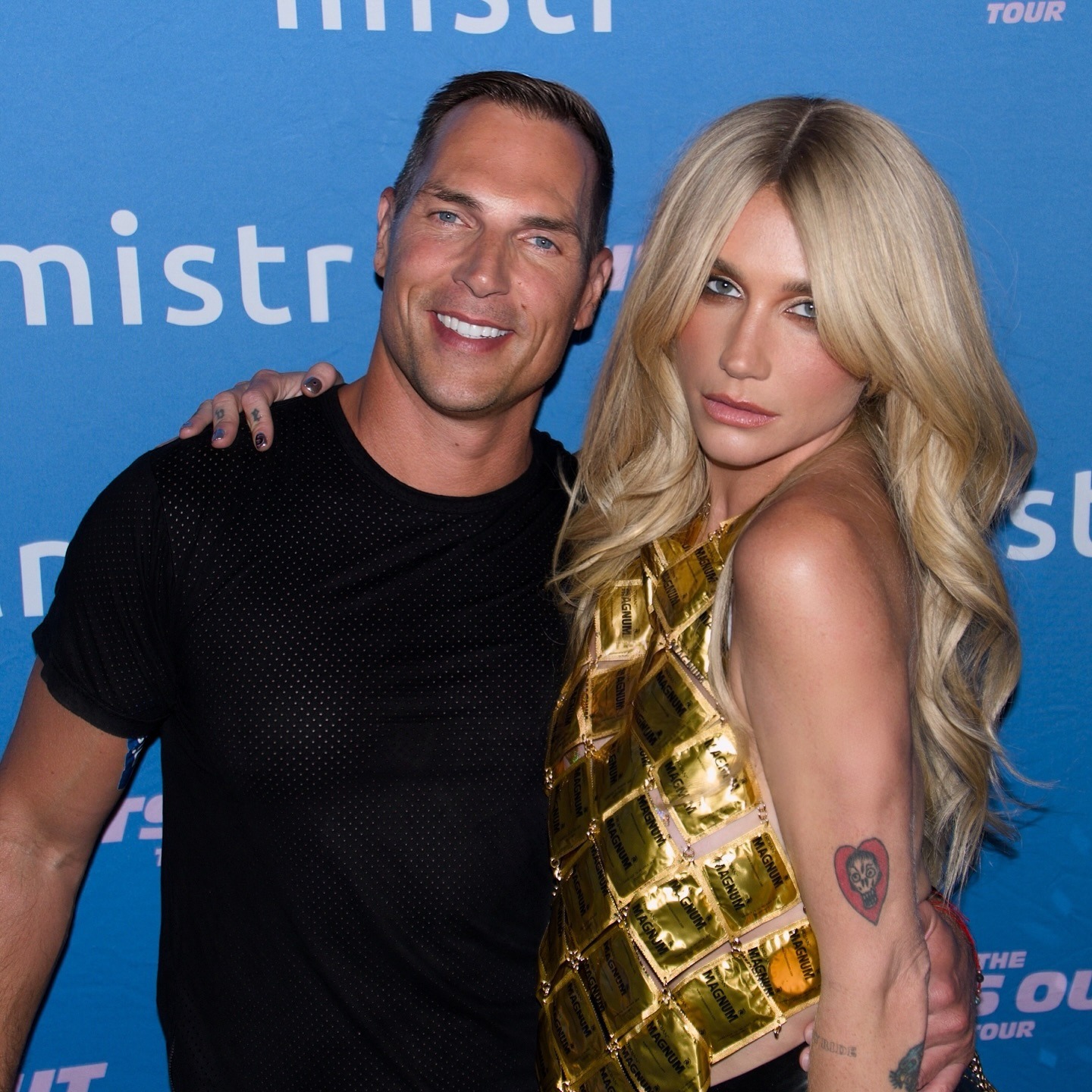
I do. Some people thought I gave myself that name, but it actually came from a journalist, I believe at the Washington Blade. Other outlets picked it up and ran with it. There's a lot of responsibility that comes with it. I'm preserving gay institutions like the Abbey and Fire Island, and I want to keep what's there while also evolving them so they can sustain themselves for future generations. It's a lot of fun, but the downside of owning all of these businesses is that I'm working seven days a week, even when I'm supposedly having a good time at the Abbey or on Fire Island.
You've faced criticism for coming in and essentially buying everything and taking it over. What are the biggest critiques you've faced?
That's the one thing about gay culture that's terrible. Other minority groups tend to gather and support each other. Gays love to tear people down. Fire Island hadn't had money invested in it in years, and when I came in with plans to change that, people pushed back. We have staff housing where two people share 80 square feet and four people share a 40-square-foot bathroom. I want to spend $3 million tearing it down and rebuilding it, and I'll probably never get that money back, but people still found ways to criticize it. It's a small, vocal minority, and it doesn't even affect them.
I was on Fire Island last weekend, and people are annoyed the hotel wasn't done by the beginning of the summer like they were told. Can you provide an update?
It's not for lack of enthusiasm on our part, and it's genuinely frustrating. It's a natural reserve in a flood plain, so there's the state, the city, multiple agencies, and it all comes down to permits. I have doors, windows and building materials sitting in a warehouse on Long Island that have been there over a year. We have the construction documents. We just don't have the permit yet.
When do you expect the doors to open so people can actually stay at that hotel?
I'm pretty confident next season. If I wanted to slap some paint on it and open early, I could have done that a while ago, but Tryst is a five-star luxury brand, and I'm building something meant to last generations.
I read that in your late teens you came out to your parents in a teary scene in a garage, where your dad was worried it would be harder for you to get a job and your mom was worried you'd get AIDS and die. What was your experience coming to terms with your sexual orientation growing up?
I came out in 1997, so almost 30 years ago now. I was living in Amsterdam at the time, in my first relationship, and I came home and told my parents I'm gay. My parents were very supportive. After my mother died, we went through the attic and found rainbow flags. She'd put one out for every holiday. People assume I had a terrible childhood or that my parents kicked me out, but I really had a great one.
You got involved very heavily in fighting to end HIV and AIDS. Is there a personal connection there?
In 1997, my boyfriend at the time was actually part of a throuple, and they were older, in their 30s, with friends who had HIV and AIDS. One of their friends died. There was so much misinformation back then about sharing toothbrushes or kissing. I was terrified of getting HIV, and if it wasn't for them educating me, I probably would have. That generation was selling their life insurance policies and quitting their jobs to travel because they thought they only had a short time left. Then medication started working and people started living. With PrEP, if you're negative, or virally suppressed if you're positive, we finally have a real opportunity to end this. We lost a whole generation of people and talent.
What are your thoughts on what the administration has done as it relates to cuts for HIV and AIDS?
It's disheartening. In his first term, Trump actually allocated the most domestic HIV funding of any president, with a goal of ending HIV by 2030, and we were on a good path. Now, in this term, every dollar cut has an impact, whether it's education, prevention or treatment. People are going to lose insurance coverage, and without that, people can't afford their medication.
What would you say to Trump right now if you could speak with him?
Let me help you be the first president to end HIV in America. I can make the case multiple ways: This makes financial sense, it's a human rights issue. There are so many reasons ending HIV should be a priority, and we can actually make it happen.
I interviewed Dr. Demetre Daskalakis, who left the CDC because he didn't think the organization was reflecting science anymore. He said people in the administration were calling HIV funding, quote, "too woke." What's your reaction to that?
That's ridiculous. HIV isn't a gay disease. It's the same as saying being gay is woke, until you're personally affected. Maybe that's what it would take to wake some of them up.
The people most vulnerable to these cuts are queer people of color in the Bible Belt and low-income, rural areas. Do you agree that's how this is playing out?
Absolutely. At MISTR, 70% of our patients are insured and 30% are uninsured, and we don't turn anyone away. Anyone at risk of HIV, especially people relying on state subsidies for coverage, is going to be affected by budget cuts or policy changes.
I read that MISTR makes some of its money through fees paid by nonprofits, through a government program that subsidizes the cost of HIV prevention drugs, and that the company could soon face challenges as Congress considers changes to that program. Has that affected MISTR yet?
We represent 65 community-based health organizations across the country that outsource their online PrEP programs to us. It doesn't cost taxpayers anything, so it's a win-win. But changes to policy and funding are a constant threat. Trump could change his mind by lunchtime, and it has a domino effect.
You brought several stars from "The Real Housewives" to Congress to speak about the importance of HIV prevention and funding. Why did you do that?
You can go into Washington combative, or you can bring star power. If I can get seven Housewives to agree on one thing, there's hope for Congress. It was well received, packed the room and got coverage from both parties, which was the whole point.
You have six boyfriends?
I do. People assume I'm dating six different guys separately, but it's really three throuples that make up one family. My fiancé and I have a boyfriend. My other two boyfriends were already a couple before I became the third in that relationship, and we've known each other for years. Then I met Victor about a year ago, and we just celebrated our first anniversary. All my boyfriends are Latino, and we call ourselves the familia. We live together and travel together, but it's not everyone sleeping with everyone. It's three throuples coexisting under one roof.
Is there not interpersonal jealousy that can become a hotter mess than any Housewives show?
No real jealousy, but like any relationship, people get on each other's nerves sometimes. For the most part, we're happy.
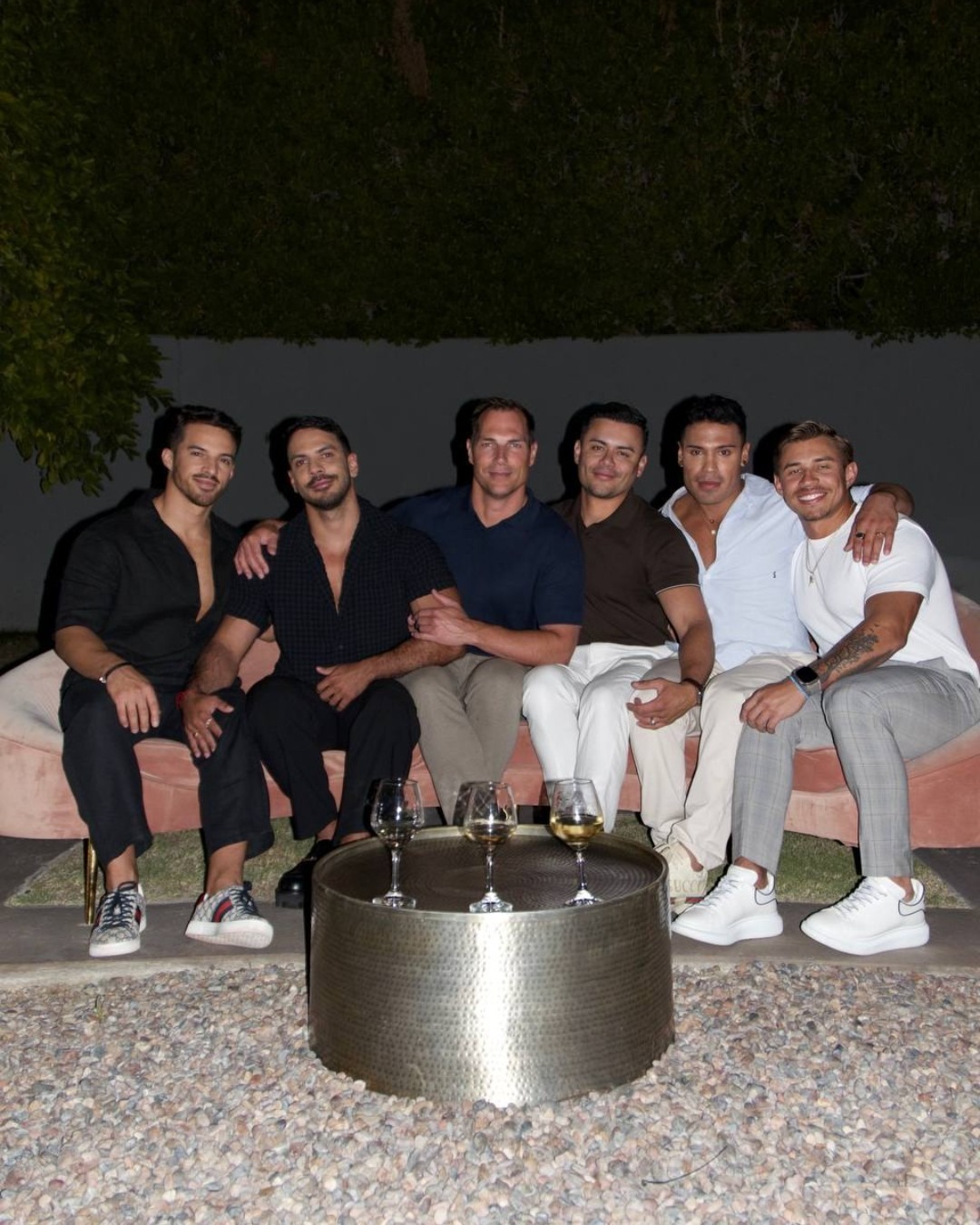
Do you worry any of them are coming for your money?
There are people out there who'd want to date me for that reason, sure. But it's one cohesive family, and the personalities have to genuinely work together for this to function. I don't really worry about it.
Tell the audience the story about Hillary Clinton, because that's one of the most iconic things I heard this past Pride month.
We were with the Clintons, and I told them I'd love a photo, but all my boyfriends had to be in it too, and they agreed. Later, I was introducing everyone to the mayor of Rio, and he stopped and asked if I really had four boyfriends. I told him I had six, and he said, let's get a picture.
Lisa Rinna has made allegations that she was drugged at the Abbey and is calling for the bar to be shut down. The Abbey has denied the allegations, saying you checked the security footage and there was nothing to corroborate what she said. Should people feel safe going to the Abbey right now, and if so, why?
They should feel very safe. We have 14 security guards on duty, cameras throughout the space, and we provide drink test strips and lids for free, no questions asked if someone thinks their drink was tampered with. When Lisa came to us, we checked the security footage and shared it with her team, and they were satisfied with that investigation. Then 30 days later, she went on television with the accusation anyway. The Abbey isn't just a bar, it's a safe space for the queer community, and that's why I bought it. Advocating to shut it down, without new evidence, isn't fair to that community.
What do you want her to do right now?
We've reached out to establish dialogue and asked her to identify the person she referenced in her video so we can investigate further. That invitation hasn't been accepted.
When you have quiet time to yourself, and you think about legacy, what comes to mind?
I think I'm lucky enough to have two. One is helping eliminate HIV, or at least helping a lot of people avoid getting it. The other is creating hotels where people can be themselves, and preserving queer institutions like Crown & Anchor, Fire Island and the Abbey. Making a real dent in either one would be a great legacy. Both would be extraordinary.
What's next for MISTR? What are you looking forward to?
Everyone knows us for PrEP, and that's still our core focus, along with long-term HIV care. We recently introduced an ED program priced 49% below the rest of the market. The goal is to keep building on making sexual health stigma-free. When we started, terms like "Truvada whore" were common. Now PrEP is socially accepted, and we want to keep expanding into gay men's health more broadly, whether that's hair restoration, ED or other wellness needs.
Read More

A Michigan Farm Stand Became a Safe Haven for LGBTQ+ People in Rural America
On a farm stand in Charlotte, Michigan, in a county that voted for Donald Trump by a wide margin in 2024, Sarah and Kim Padilla hung a Pride flag and waited to [...]Read more about A Michigan Farm Stand Became a Safe Haven for LGBTQ+ People in Rural America
Trump Is Targeting the Smithsonian. My LGBTQ+ History Is Inside It.
There’s been something troubling me for the last couple of years about what the Trump administration has been doing. It affects me personally, but I’ve mostly [...]Read more about Trump Is Targeting the Smithsonian. My LGBTQ+ History Is Inside It.

A Lifeline for LGBTQ+ Students in Michigan Schools Is Running Out of Money
For 25 years, the Michigan LGBTQ+ Students Project has worked to make schools safer for the state's LGBTQ+ youth, at a moment when many of those students [...]Read more about A Lifeline for LGBTQ+ Students in Michigan Schools Is Running Out of Money
El-Sayed Turns Tables on Watters in Fiery Fox News Clash Over Trans Healthcare
Michigan Democratic Senate candidate Abdul El-Sayed used an unlikely question to expose what he called conservative hypocrisy on medical decisions for minors, [...]Read more about El-Sayed Turns Tables on Watters in Fiery Fox News Clash Over Trans Healthcare

Queer Things to Do: Meet Mercury Stardust, See Tove Lo, Plan for Mackinac Island Pride, Volunteer for Local LGBTQ+ Youth
As another summer draws to a close, it can feel tempting to lean into all that Big Pumpkin Spice energy emanating from your social media feeds. But before you
Out Gay Wrestler Anthony Bowens Keeps Winning — This Time at the Biggest Pro-Wrestling Event
It was, according to All Elite Wrestling (AEW), the biggest World Championship event in pro wrestling history. It happened this past weekend at London’s famed