A Queer Detroit Artist Finds Her Place in Rural Michigan
How a stained-glass artist turned rural isolation into queer connection, creating the spaces she couldn't find up north
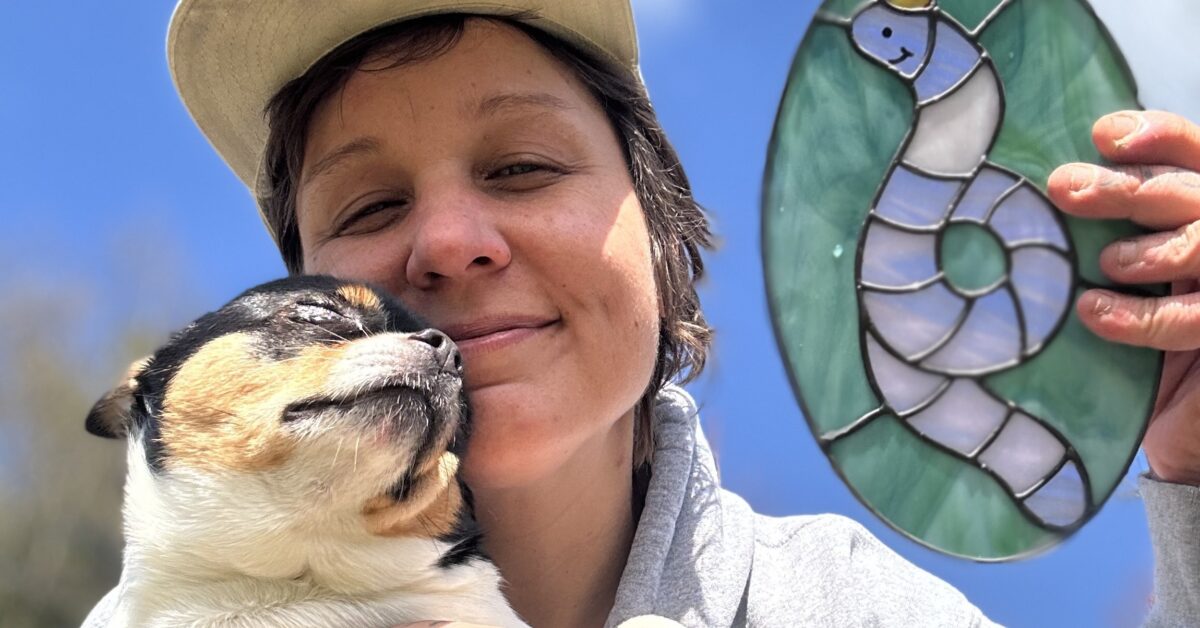

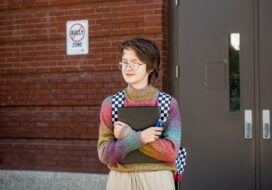
The first time I set up a table at the local farmers market, people barely made eye contact, let alone opened their wallets. I was a tattooed, masc, blue-haired transplant selling stained glass that had nothing to do with the barns and birch trees everyone else up here paints. It would be years before that same work — sold through queer-owned pop-ups, displayed at art retreats I helped build from nothing — became the thing that finally made this small town feel like mine.
Like many small-town queers, I dreamed of moving to the city in hopes of finding my authentic self. And I did just that after high school. Growing up in the early 2000s, everything was "gay," but nobody wanted to be "the gay." Hilary Duff's "Think Before You Speak" campaign came out well beyond my youth. The only gay person I actually knew growing up was a middle school teacher who died of AIDS, and the story of Matthew Shepard, which has never left me.
Honestly, I was so unaware of gender and sexuality that I'd convinced my younger self I was born a boy and my parents wanted a girl so badly (I have two older brothers) that they changed my sex at birth. I wasn't aware of my queerness in a conscious way until I left for college.
If I said my wife and I never fell into the stereotypical "U-Haul syndrome," I'd be lying. But once we began hanging out, her stuff was sprawled all over my house, and she basically never left after that.
After living in downtown Detroit through Covid, the BLM protests, resigning from my teaching job and the passing of my wife's grandfather, we were exhausted. The place I thought would save me became a constant reminder of trauma. It was time for a change. What began as a grief-stricken trip "up north" ended as a transcendental life change that swept us up quicker than a lesbian romance.
We didn't have any ties to Northern Michigan, or really any prospects, before moving. But within a month we closed on a house and essentially ghosted the city of Detroit. We wanted what everyone longs for in the rural countryside: peace and quiet. We ended up in a small town that was totally reminiscent of the community I grew up in.
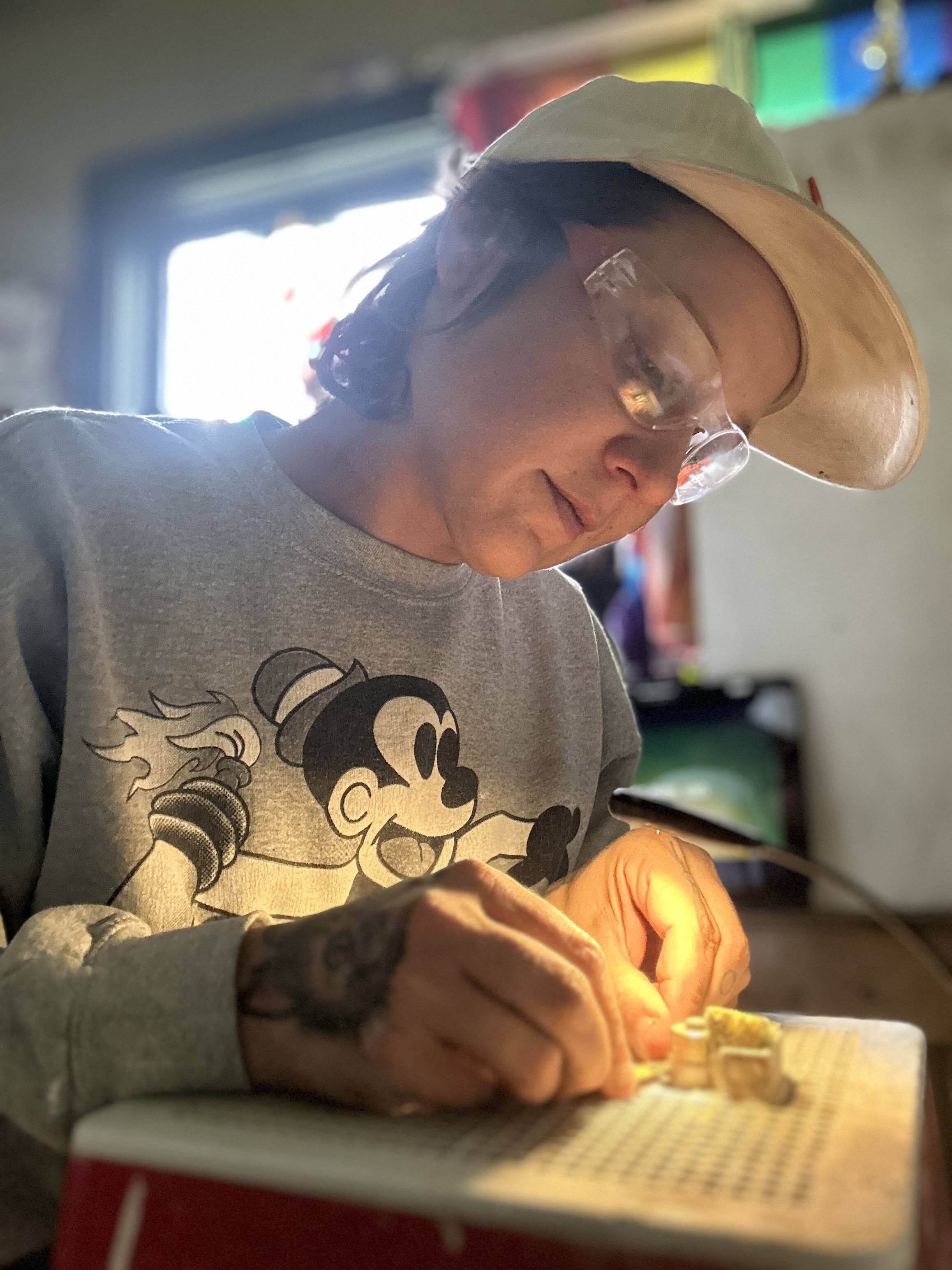
I think the one thing the LGBTQ+ community can agree on is how isolating and lonely life can be at times, regardless of where you're living. What we didn't realize came along with the peace and quiet was the isolation. Winters are a whole new season up here. I didn't realize how moving back to the country would bring all those lonely childhood feelings back. That closeted tomboy who suppressed every feeling and hid in heterosexual relationships was back. Except this time I embraced my queerness and have come to realize that all those feelings I censored are what I've come to love about myself.
There are no queer spaces, meetups or virtually any visibility or community where we live. I can count rainbow flags on one hand, and two are ours. One year we removed our Pride signs after finding countless profanities and trash in our yard, including a brick. One of our straight friends even suggested we "just put them in the backyard," and it felt like being told to go back in the closet. In a world where we're unsure if someone will react with violence, I still find myself in many situations introducing my wife as something other than that — a roommate, a friend. We've had a car come toward us as the people inside screamed hateful things and threats, simply for existing next to each other. I'd be lying if I said moving back to Detroit wasn't a recurring conversation we've had.
Living in a rural community, you discover quickly that a social life needs planning. Unlike the city, where there are countless things happening at every hour, finding a cool event up north is about as rare as catching the northern lights, let alone knowing if it's a safe space. Fortunately, I also learned there are far more gays living here than I knew downstate. Some are transplants and some are homegrown queers. Some are visibly out, but a lot aren't, and many are older than me. Wherever they were from, I knew we needed each other, and if I couldn't find safe spaces to be social, I was going to create them.
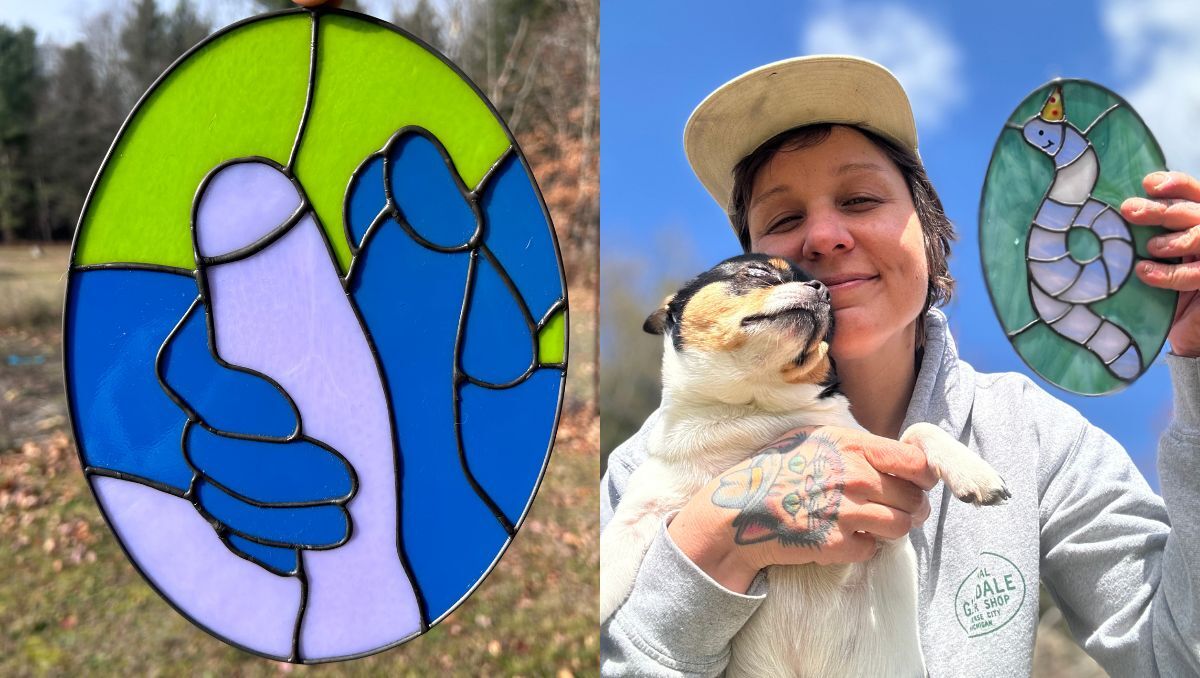
As a stained-glass artist, I desperately wanted to find places that wanted to display and sell my work, places that were queer-affirming and vocal about their support of the LGBTQ+ community. In time, I found quite a few. Don't get me wrong: The first few years were a struggle of toggling art with picking up work on the side. I even tried my luck at the local farmers market my second year, and, to no surprise, people barely made eye contact, let alone opened their wallets to buy from me. Not only was I a tattooed, masc, blue-haired weirdo wearing a Bernie Sanders T-shirt, I'm not exactly replicating nature like most Northerners. This type of art excludes me from most galleries around here and just created another layer of isolation.
To combat that isolation, and to make good on my commitment to create safe spaces for others like me, I began curating pop-up art shows and classes with other businesses owned by LGBTQ+ community members or allies, people I'd now consider friends. As a result, I was meeting more and more queer people and building community. Through that, I met the owner of Motel Bear Lake, and we've thrown a handful of queer-friendly art retreats at the motel that have only grown in numbers, justifying the need for these queer spaces to be accessible for all ages and backgrounds. The last queer art retreat we hosted even brought people from out of state, reminding me that there's a need for community not only here, but everywhere.
I hope that one day, kids will be able to live authentically and freely, especially in rural places. I want everyone to realize there are gay farmers, trans factory workers and queer construction workers, even in rural backwoods areas, and they've always occupied those spaces. The people you may think you hate may be the people you love, you just don't know it yet.
We want the same quiet, peaceful life that every other transplant longs for. For some, that means more visibility. Putting a small sticker of acceptance in the window of your business, or a rainbow sign in your yard, can go a long way for a gay kid who feels alone in the world, especially when we're continuously being canceled or erased. With visibility comes questions. As an elder queer, I have to be open to helping others understand the younger generation of gays. I used to hate when little kids would stare, until I realized I'm probably the only nonbinary person they've ever seen, let alone one living happily married. It's hard for people to understand things they've never been exposed to.
When I express my frustrations with living here, I'm told, "Just move, it's more liberal there." And they're probably not wrong. But we don't want to move. This is our home. We want change.
Most small-town folks want the same thing no matter what they believe: a living wage and a healthy life. We're not asking for special treatment. We're asking for safety and visibility in a place where people still face stigma, fear and risk. I had to leave my small town to find an accepting community that allowed me to be fully myself. Kids shouldn't have to leave home to find their authentic selves.
It's time to claim queer joy in rural places, a place some of us will always know as home.
Read More
Dolly Parton Spent Her Life Affirming Us. Trump Is Spending Her Death Centering Himself.
I want to say Dolly Parton was too good for this world, but I don’t think she’d agree with such a statement. But I think it’s fair to say she was better than [...]Read more about Dolly Parton Spent Her Life Affirming Us. Trump Is Spending Her Death Centering Himself.

Madonna Is a Queer Icon. I Finally Get It.
I have a confession to make. Up until recently, I didn't really understand why everyone loved Madonna so much. I didn't think the Michigan native was [...]Read more about Madonna Is a Queer Icon. I Finally Get It.
Log Cabin Republicans Make It Official: They Hate Trans People
The Log Cabin Republicans is an absolutely worthless organization. Actually, they’re worse than worthless because they gleefully help to advance the Republican [...]Read more about Log Cabin Republicans Make It Official: They Hate Trans People
‘Why Wouldn't I Stand Up for Everybody?': Remembering Dolly Parton and Her LGBTQ+ Allyship
Here's the thing nobody's obituary is going to lead with, so I will: Dolly Parton picked up the phone for queer press. Not just the glossies with the [...]Read more about ‘Why Wouldn't I Stand Up for Everybody?': Remembering Dolly Parton and Her LGBTQ+ Allyship
How the Disc Golf Pro Tour Tried to Bar a Trans Woman From Competing and Why They (Sort of) Reversed Course
The sport of disc golf is far more than fancy Frisbee. In two separate divisions of the Disc Golf Pro Tour — female and mixed — players compete for purses that [...]Read more about How the Disc Golf Pro Tour Tried to Bar a Trans Woman From Competing and Why They (Sort of) Reversed Course
How Gay Is Cedar Point?
Cedar Point. "America's Roller Coast." I've been making the two-hour trek down to Sandusky, Ohio to go to the beloved amusement park since I [...]Read more about How Gay Is Cedar Point?