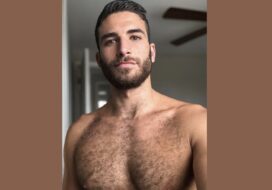
Rethinking Masculinity: What Queer and Trans People Taught Me About Being a Man
On butch identity, trans mentorship and the quiet masculinity of showing up
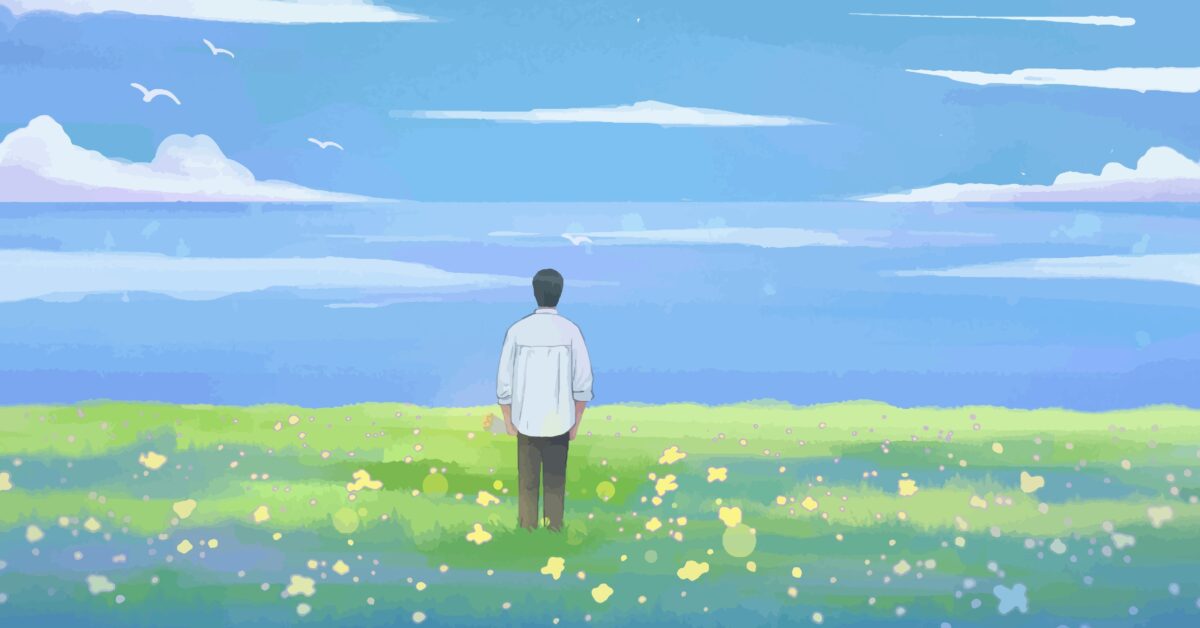

I was the youngest “girl” — meaning assigned girl — in a large Midwestern farm family in the 1970s. We didn't talk much about gender, but masculinity wasn't exactly an abstract concept. It was everywhere.
It drove tractors. It fixed things. It wore work boots. It got up early. It hauled heavy things without first conducting a committee meeting about whether those things actually needed hauling.
And although we didn't talk about masculinity, I thought about it a lot. Mostly because I wanted some.
I didn't know that was what I wanted, of course. I was a person assigned female at birth who did not particularly identify with femaleness, growing up decades before the phrase “gender identity” was going to wander into my consciousness via a Tumblr post and explain what the hell had been going on.
So masculinity mostly seemed like a club I desperately wanted admission to, although I didn't know there was a club, didn't know admission was theoretically possible and certainly didn't know where they kept the application. I just knew there was something over there that I wanted. I wanted the clothes. I wanted the posture. I wanted the jobs. I wanted the casual assumption that if something heavy needed to be moved, somebody would look in my direction. But I couldn't have told you any of that at the time.
Instead, it was just an ache, a deep sense of "Why does everything feel vaguely terrible, and why do I suddenly feel better when someone lets me use a chainsaw?”
You would think, when I first came out as a lesbian in the mid ‘90s, perhaps this could have given me a big dose of “Let's Explore Masculinity.” But in my queer world, most trans guys were medically transitioning and then going out to live their lives as dudes, often with little ongoing contact with non-trans queer folks. There were many reasons for this, including how trans men were treated by certain feminist lesbians who decided that transitioning was "becoming the enemy, and none of them are my business at all.
But in 2008, with the founding of the Butch Voices conferences, I was suddenly given admission to a world where I could have conversations about underwear and haircuts with people who wanted underwear and haircuts that looked like mine. Butch Voices brought together butches, studs, transmasculine people and other folks under the broad umbrella of “Masculine of Center." We were people who might have very different relationships to gender but shared some version of, “Hey, yo, masculinity is happening over here! Wanna chat about it?”
Suddenly, masculinity wasn't just something I wanted access to; it was something we could examine together. What parts had we inherited? What parts had hurt us? What did we love about it? What kind of masculine people did we actually want to be? For the first time, I was having those conversations with other masculine-identified people instead of just quietly standing near the power tools hoping gender would somehow eventually explain itself. And without (and this deserves an essay of its own) presuming on the emotional and logistical labor of non-masculine-identified people in my community, often (let's be real here) the femme-identified person I was dating.
With the help of the folks I met through Butch Voices, my masculine identity evolved. Years have passed now, and I'm often in a position to teach and mentor trans young people; I'm theoretically supposed to be the elder in these relationships. This is adorable. Because 90 percent of the time, I'm learning from them.
Watching young trans men construct masculinity consciously and intentionally is almost like watching a painter create a watercolor landscape. They aren't starting with a blank page exactly — the colors are already there, handed down by family, culture, every man they've ever loved or feared or wanted to become. But they get to decide which ones to use, which ones to dilute, which ones to let bleed into each other and which ones absolutely do not belong in this particular painting.
But even though I will always and forever campaign for queer and transfolks to be given the credit for all we've created and the mainstream claims as their own (friendsgiving anyone?), I can't in fairness say we're the only people who understand chosen masculinity. Because I've seen chosen masculinity in my own family.
One of my brothers is a career military man based in Kalkaska, Michigan. If you were casting somebody in the role of Traditional Tough Midwestern Masculinity, he wouldn't get a callback. He wouldn't get a callback because the casting director would interact with him for 30 seconds, walk out into the waiting room and say, "We've made our decision," and send everyone else home. The casting director — once he interacted with my brother — would send John Wayne home.
So this Traditional Tough Midwestern Masculinity is who my brother is. But he's also the guy who treasures sentimental keepsakes. And he's also the guy when he was performing chest compressions on our dying grandfather (he was an adult and a trained paramedic) did so with tears running down his cheeks. And he's also the guy who fills his teenage kids' water bottles before school every morning.
His kids can fill their own water bottles. This is not an essential parental task. Nobody from Child Protective Services is going to arrive at your house because your 15-year-old had to operate a faucet. It's not really about the water. It's about care. It's a small daily ritual that says, “I thought about what you will need today, and before you even asked, I wanted to make sure you had it.”
There is something tender about that. And, possibly now in my mind, something deeply masculine. I used to think healthy masculinity meant removing the bad parts: Don't suppress emotion, don't dominate, don't confuse anger with strength. But maybe that's only half the work. Maybe we should also notice what's already there.
My brother crying while trying to save our grandfather wasn't masculinity interrupted by emotion. The emotion was part of it. So is filling the water bottles.
The young trans men in my life have taught me about choosing masculinity intentionally. The men I grew up with have taught me that care doesn't always announce itself as tenderness. Sometimes it fixes what's broken. Sometimes it shows up. Sometimes it fills the water bottle.
Maybe healthier masculinity isn't something one generation invented and another needs to learn. Maybe we just need to get better at recognizing it.
Read More
A Queer Detroit Artist Finds Her Place in Rural Michigan
The first time I set up a table at the local farmers market, people barely made eye contact, let alone opened their wallets. I was a tattooed, masc, blue-haired [...]Read more about A Queer Detroit Artist Finds Her Place in Rural Michigan

Dolly Parton Spent Her Life Affirming Us. Trump Is Spending Her Death Centering Himself.
I want to say Dolly Parton was too good for this world, but I don’t think she’d agree with such a statement. But I think it’s fair to say she was better than [...]Read more about Dolly Parton Spent Her Life Affirming Us. Trump Is Spending Her Death Centering Himself.

A Lifeline for LGBTQ+ Students in Michigan Schools Is Running Out of Money
For 25 years, the Michigan LGBTQ+ Students Project has worked to make schools safer for the state's LGBTQ+ youth, at a moment when many of those students [...]Read more about A Lifeline for LGBTQ+ Students in Michigan Schools Is Running Out of Money

Madonna Is a Queer Icon. I Finally Get It.
I have a confession to make. Up until recently, I didn't really understand why everyone loved Madonna so much. I didn't think the Michigan native was [...]Read more about Madonna Is a Queer Icon. I Finally Get It.
The Year of Opal
It is with humility, pride and a bit of awe that I celebrate my 24th year with Between The Lines and Pride Source this month. The traditional theme for a 24th [...]Read more about The Year of Opal

The Complicated Reasons Why the Fisting Scene in Detroit Is So Downlow
A few weeks ago, I almost went to my first live fisting show.A popular tweeter and OnlyFans performer casually announced on Twitter that he’d be fisting a [...]Read more about The Complicated Reasons Why the Fisting Scene in Detroit Is So Downlow