Is It Ever Too Late? Geriatric Gender Transitioning and the Race Against Time
For trans people who come out after 65, obstacles multiply, but the peace of living authentically may be the only solution
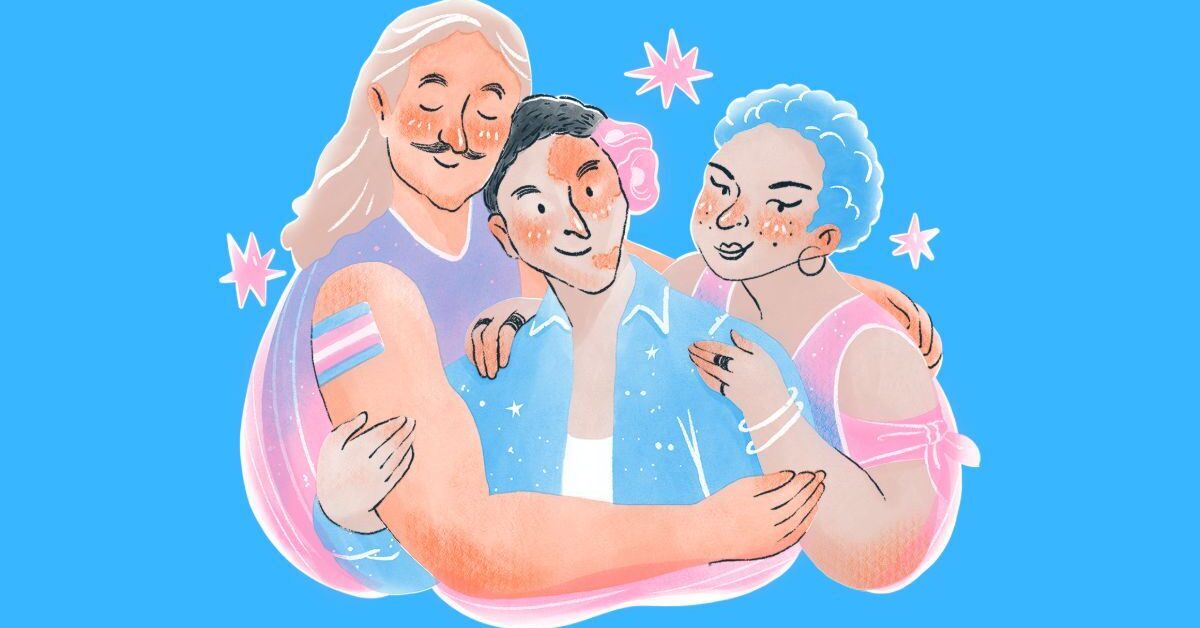

I know. The thought of getting old makes you uncomfortable. If you're young, you try not to think of it at all. Consequently, gender transitioning late in life doesn't usually pop up in conversation.
It hit home for me when I was messaging recently with an online friend. She is a very successful author, whom I recently found out is transitioning. I felt it incumbent on me to contact her and offer congratulations and support.
That fact in itself isn't remarkable. I meet people in some state of transition all the time. What made this egg-cracking notable was that the person transitioning is almost 75 years old.
Now, that is remarkable. There are quite a few septuagenarian transgender people, but very few who wait until that decade to come out.
Probably the best-known example of such geriatric transitioning came in the form of Caitlyn Jenner. When she announced her transition in 2015, she was 66 years old.
Despite how you may feel about her personally or about her politics, Jenner's reveal not only brought with it mainstream — i.e., cis media — trans visibility, but also the possibility of someone considering gender affirmation after retirement age.
Her coming out was met with shock and mixed reactions. While she naturally became the butt of jokes for comedians, she also was feted and honored by many in the media. ESPN gave her the Arthur Ashe Courage Award, Barbara Walters named her the Most Fascinating Person of 2015, and the July 2015 issue of "Vanity Fair" gave her the full-glam treatment with an Annie Leibovitz cover and interior photo layout accompanying a glowing interview.
News flash: Most elder trans people don't get that kind of attention, nor that much support.
To begin with, most aging trans people who haven't yet outed themselves slam up against certain realities that hit them harder than they do younger trans people.
To start with, the sense of time is different for both.
A person who transitions at a young age may do so by means of "queer time." That is a concept explained in queer theorist J. Jack Halberstam's book, "In a Queer Time and Place," as "the potentiality of a life unscripted by the convention of family, inheritance and child rearing."
"Queer subcultures produce alternative temporalities by allowing their participants to believe that their futures can be imagined according to logics that lie outside of those paradigmatic markers of life experience — namely birth, marriage, reproduction and death."
Our cisgender-dominant society doesn't operate with those same parameters. Life events are hard-wired, thereby creating a subjective temporal structure that informs personal identity. Especially the concept of "blood family."
For a younger trans person in their teens or even 20s, estrangement from their biological family isn't unusual, no matter their gender. Often, time diminishes the pain of that break, and healing is always a possibility.
For older trans people, though, time is not on their side. My friend is experiencing the heart-wrenching problems created by decades of living by society's established concepts.
She told me how her spouse of more than four decades is "struggling" with her coming out, and her two children are torn between support by one and ostracization by the other. She had often written about her love for, and the closeness of, her biological family in her published work. Now, she avoids writing about them at all.
Compounding this tragedy is the inescapable fact that she has only a relatively short time to reconcile with her loved ones. Which necessarily brings up the matter of an elder trans person's overall health.
A 2014 study of geriatric trans people in the U.K., published in the May 2024 online "International Journal of Transgender Health," noted that the older transgender community experiences poorer physical health, disability, increased perceived stress and depressive symptomatology compared to their cisgender and LGB counterparts.
The study also found high reported rates of poor physical and mental health, including HIV, mental illness and issues associated with gender-affirming treatment. Older transgender people are also reported to be at an increased risk of dementia, which is partly due to high incidences of dementia-associated risk factors.
These obvious complications are countered by the generally accepted conclusion that gender-affirming medical treatments (i.e., hormonal and/or surgical), which align transgender individuals' outward physical appearance with their internal gender identity at any age, tend to lead to higher quality of life, according to a study published in an online issue of LGBT Health on Jan. 16, 2019.
Additionally, transgender elders may experience ageism when seeking treatment, as medical insurance plans place arbitrary limits on coverage for transgender elders. Some healthcare providers discourage transgender elders from undergoing these treatments.
The Gender Confirmation Center also points out that such factors as Body Mass Index, smoking and drinking habits, blood pressure and a personal history of heart disease or strokes may inhibit medical clearance for gender-affirming care.
And finally, various drug interactions could hinder prescription of hormone replacement therapy.
An online check of health plan coverage by two of Michigan's largest medical providers — Blue Cross Blue Shield of Michigan and the University of Michigan's Michigan Care — do not specify any age limitations on gender-affirming health services, as long as they are deemed medically necessary. It is recommended that each transitioning individual check with their own insurance provider.
Unfortunately, there are few groups or organizations dedicated to helping elderly people with their gender affirmations. Locally, Transgender Michigan has a small group called TGMI Older Adults Chapter on Facebook. And MiGEN, which is an LGBTQ+ elder network, although not exclusively transgender-oriented, is of some help. But for the most part, gender transitioning after retirement age is a solitary, and often lonely, undertaking.
Yet, despite all the obstacles, gender transition may be the only solution for someone who has hidden their true gender for decades.
"If you're 25, you've got your whole life in front of you," stated one older trans woman in a BBC story from Oct. 11, 2015. "But at 67 do you want to spend three years in transition?"
"I felt I couldn't live with my body not matching my brain gender."
The journey for an elder trans person is not easy, but at the end, there is a peace like they have never known before. I hope my friend comes to the same conclusion.
Read More

Giving in to Anti-Trans Hysteria Is Not a Winning Strategy for Democrats
I was at a concert recently and a person next to me was wearing a cross-body bag that read, “Speak Up for Your LGBTQ+ Friends.” This person appeared to be your [...]Read more about Giving in to Anti-Trans Hysteria Is Not a Winning Strategy for Democrats

Trump Is Targeting the Smithsonian. My LGBTQ+ History Is Inside It.
There’s been something troubling me for the last couple of years about what the Trump administration has been doing. It affects me personally, but I’ve mostly [...]Read more about Trump Is Targeting the Smithsonian. My LGBTQ+ History Is Inside It.

Rethinking Masculinity: What Queer and Trans People Taught Me About Being a Man
I was the youngest “girl” — meaning assigned girl — in a large Midwestern farm family in the 1970s. We didn't talk much about gender, but masculinity [...]Read more about Rethinking Masculinity: What Queer and Trans People Taught Me About Being a Man

A Queer Detroit Artist Finds Her Place in Rural Michigan
The first time I set up a table at the local farmers market, people barely made eye contact, let alone opened their wallets. I was a tattooed, masc, blue-haired [...]Read more about A Queer Detroit Artist Finds Her Place in Rural Michigan
Final Show For Late Artist, Pride Source/Between The Lines Columnist to Open This Week
He left us in December but his memory will always linger on in metro Detroit’s queer community.The work of artist and longtime Between The Lines columnist [...]Read more about Final Show For Late Artist, Pride Source/Between The Lines Columnist to Open This Week

Florida Republicans Working Overtime to Make the State a Hellscape for Trans People
Things for trans and non-binary people in Florida, especially kids, are just getting worse and worse by the day.Republicans have a supermajority in Florida and [...]Read more about Florida Republicans Working Overtime to Make the State a Hellscape for Trans People